
How to Visit King Ludwig’s Fairytale Castles in Bavaria, Germany
This post may contain affiliate links. Read my disclaimer policy.
Nothing feels more like stepping back in time and into royal setting than visiting King Ludwig’s magnificent palaces in the state of Bavaria in southern Germany.
King Ludwig’s castles make up some of the most popular tourist destinations in the region. Combined with the stunning backdrop of the Bavarian Alps and the villages below, these magical landscapes are definitely worth visiting.
This guide will help you plan your ultimate dream escape to König Ludwig II’s fairy tale castles in Bavaria!
Quick Answer
- To visit King Ludwig II’s Bavarian palaces, Munich makes a great base.
- The Munich Residenz and Nymphenburg Palace are located in Munich.
- Neuschwanstein Castle and Linderhof Palace are accessible as day trips by train or car (1.5–2 hours from Munich).
- Herrenchiemsee Palace requires a train plus a short ferry ride to reach its island location.
- All five palaces require paid admission.
- Purchase Neuschwanstein castle tickets online in advance. This castle sells out weeks in advance!
Our Experience with King Ludwig’s Fairytale Castles
Aaron and I have visited all five of King Ludwig’s palaces (some more than once) in various seasons and by car, train, and ferry. We’ve done the tours, explored the grounds, and researched everything from ticket options and parking to public transit, accommodations, and dining. It’s all part of how we update and enhance our DIY Germany Travel Planner and creating magical custom trips for our clients.
Who Was “Mad King” Ludwig II?
Quick Answer: King Ludwig II ruled Bavaria from 1864 until his mysterious death in 1886. Rather than governing, he devoted himself to building elaborate palaces and castles, earning the nickname “Fairy Tale King.” Declared insane by his own government, he was exiled and found dead in Lake Starnberg the following day — a mystery that remains unsolved.
King Ludwig II of Bavaria (Ludwig Otto Friedrich Wilhelm) ruled over Bavaria from 1864 until his mysterious death in 1886. His ascended the throne at just 18 years old after the sudden death of Ludwig’s father.
Passionate about the arts and music, King Ludwig became more known for his extravagant building projects than for his political leadership.
He was only occasionally involved in the state affairs, preferring to lead a more secluded life where he could dedicate himself to creative architectural projects.
He grew more eccentric two years after he ascended to the throne, when his kingdom suffered a big loss in the Austro-Prussian War. This war effectively stripped him of any real power as King of Bavaria.
This caused him to withdraw further into his own fantasy world to live out an alternate reality where he was still king. He devoted himself building magnificent palaces and fantasy castles, earning him the famous nickname “Fairy Tale King” (Märchenkönig).
All of this was beyond his means as a constitutional monarch. His extravagant spending and neglect of his duties led the government to declare him as insane and forced him to resign. He was exiled to Berg Palace with his psychiatrist. The next day they were both found dead in Lake Starnberg under mysterious circumstances.
His mysterious death remains unsolved to this day. Some believe it was murder while others think it was suicide. Either way, Ludwig’s death only adds to his cult-like status as a historical figure and makes his castles even more intriguing.
Why Are King Ludwig’s Palaces Worth Visiting?
- Diverse Architecture: From the sprawling urban Munich Residenz to the hilltop fairy tale of Neuschwanstein.
- Royal History: Explore the eccentric life and unsolved mystery of the “Mad King.”
- Stunning Landscapes: Many palaces are set against the backdrop of the Bavarian Alps or located on islands like Herrenchiemsee.
- Easy Access: Most are reachable within two hours of Munich city center by car or train.
If you’re visiting Bavaria and are into magnificent castles and grand palaces, King Ludwig’s are some of the best to experience. Aaron and I have now visited all of King Ludwig’s – some more than once – and we highly recommend working at last 1 into your Germany itinerary.
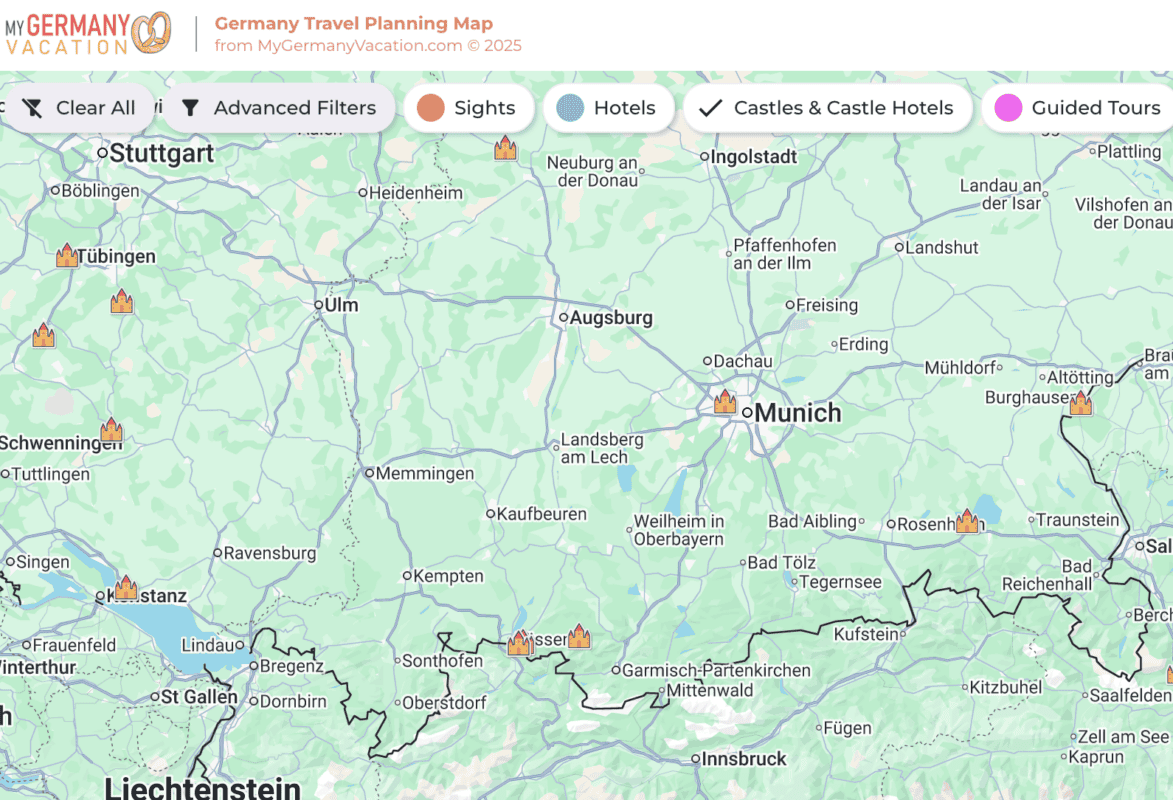
How to Get to Each Castle or Palace from Munich
| Palace | Location | Getting There | Travel Time from Munich |
|---|---|---|---|
| Munich Residenz | Munich city center | U-Bahn to Odeonsplatz | 15–20 min |
| Nymphenburg Palace | Western Munich | Tram 17 or Bus 51 | 30–40 min |
| Neuschwanstein Castle | Near Füssen | Train + bus | ~2 hours |
| Linderhof Palace | Near Oberammergau | Train + connecting bus | ~1.5 hours |
| Herrenchiemsee Palace | Lake Chiemsee island | Train + ferry | ~1.5–2 hours |
How Do I Visit the Munich Residenz (Residenz München)?
At a Glance: The Munich Residenz is Germany’s largest city palace, located in the heart of Munich’s Old Town. Take the U-Bahn to Odeonsplatz or walk 10 minutes from Marienplatz. The complex includes the Residence Museum, the Treasury, and the Cuvilliés Theater. The Court Garden is free to visit.
Located near Munich’s central plaza Marienplatz, the Munich Residenz is the largest city palace in Germany. Its central location in old town Munich makes it an easily accessible stop in your Munich itinerary.
Old town Munich is filled with tourist sites within close distance of each other. To making the most out of your trip, book a walking tour that takes you to Munich Residenz and other historic sites.
First built in the Middle Ages as a medieval fortress, it eventually became the official residence and government seat of Bavarian royals for 400 years.
Over the years, it was transformed by monarchs to expand into grand guest rooms, courtyards, a concert hall, and even stables. One of Ludwig’s first projects was actually to redesign rooms in the residence.
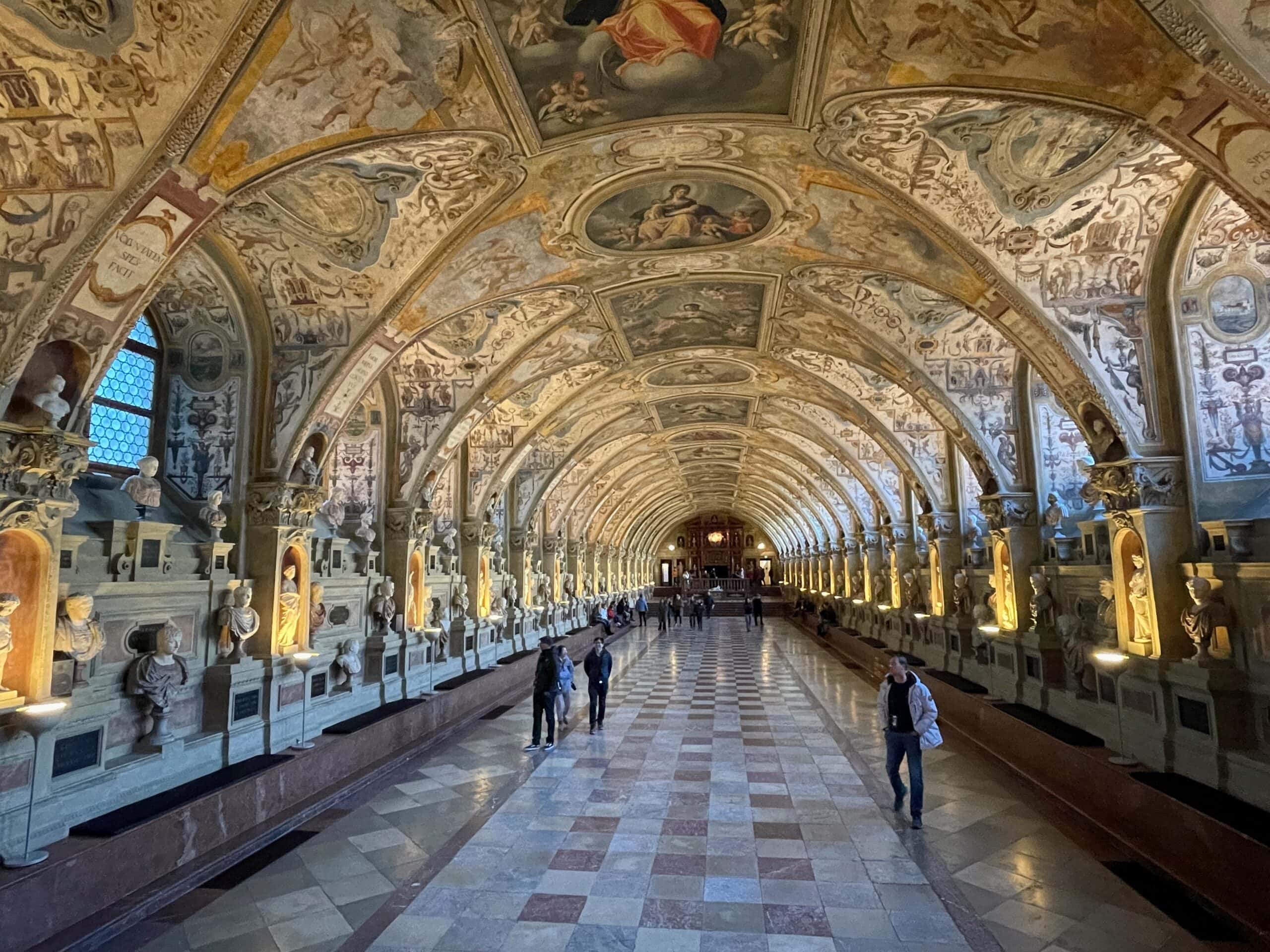
Now the Residenz is open as a museum with guided tours to different areas of the palace complex. Inside you can admire ceiling frescoes, antique collections, and luxurious interiors.
If you don’t have time to visit all rooms, it’s still worth your time to stroll through Court Garden to admire the fountain and beautiful sculptures.
Each area of the Munich Residenz is ticketed separately. The Residence Museum, the Treasury, and the Cuvilliés Theater each require their own admission. The Court Garden and Fountain Machinery are free to visit. For current prices, visit the official Munich Residenz website.
How Do I Visit Visit Nymphenburg Palace (Schloss Nymphenburg)?
At a Glance: Nymphenburg Palace is King Ludwig II’s birthplace and one of Europe’s largest baroque palaces, located in western Munich. Take Tram 17 or Bus 51 to the Schloss Nymphenburg stop, then walk about 15 minutes to the entrance. The estate includes the main palace, baroque gardens, smaller park pavilions like Amalienburg and Badenburg, and several specialized museums.
Nymphenburg Palace is another popular castle close to Munich’s city center. It’s located in the western part of the city and can easily be reached by public transportation (take a bus or tram to “Schloss Nymphenburg” station). Then walk about 15 minutes to the palace entrance.
If you don’t want to deal with commuting, a great option is to take the Munich Hop On Hop Off Bus, which stops at Nymphenburg Palace.
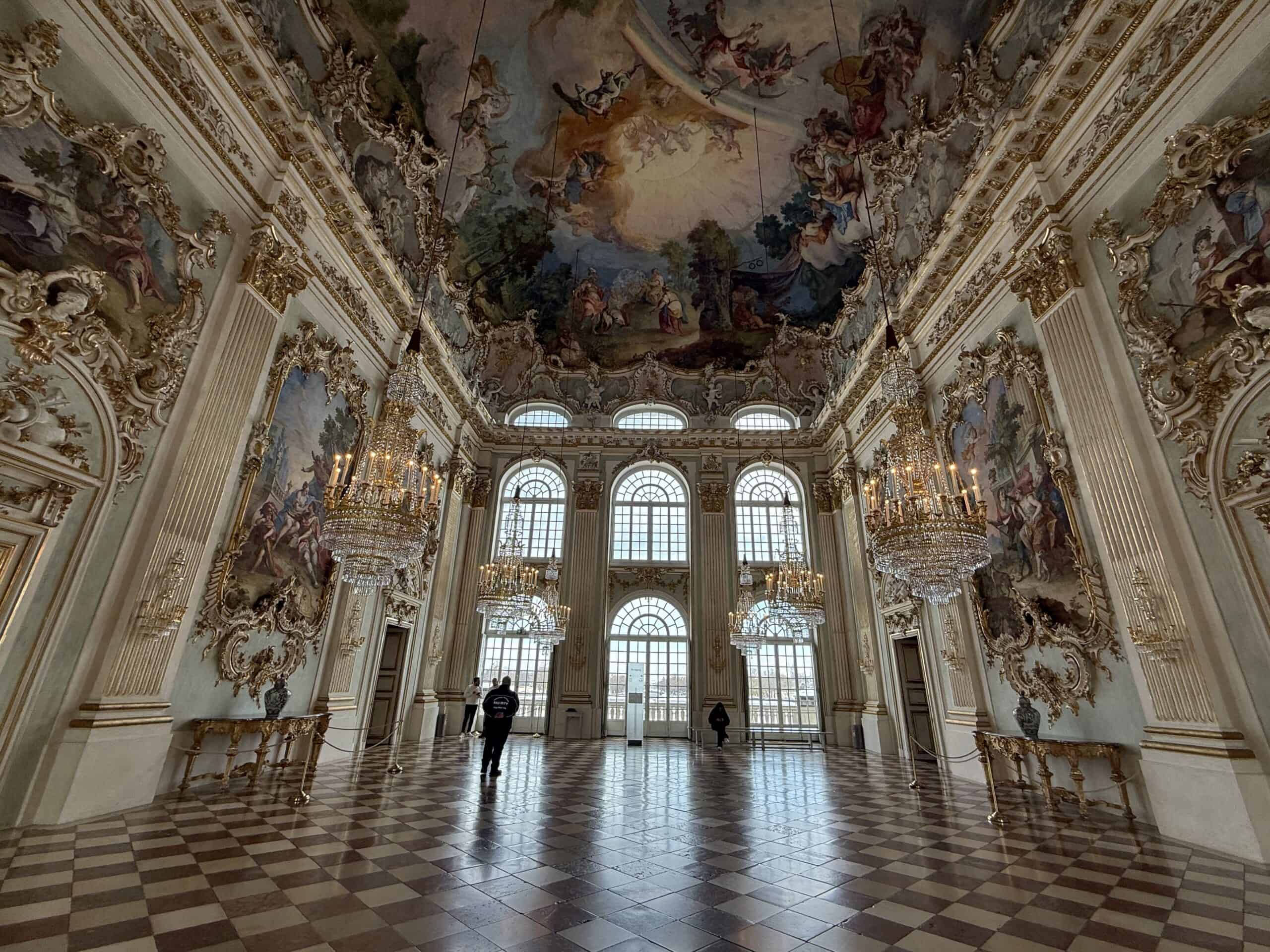
Known as the birthplace of King Ludwig, Nymphenburg can easily fit a whole day of activities! Even in the winter months this palace and grounds are fun to visit.
The interior of the palace is good for visiting the unique museums dedicated to different niches like carriages and porcelain. At night, you can even watch a classical music concert by the Munich Philharmonic.
The palace grounds are filled with cascades, streams, a lake, and even smaller castle buildings. You’ll also find interesting pavilions like Amalienburg and Badenburg, a sauna and bathing hall. I visited in the winter and spent more time wandering around the grounds than I did inside the palace!
If you need a break in between the sightseeing, you can grab a bite at either of the two restaurants: Schlosscafé im Palmenhaus (in the park) or Schlosswirtschaft Schwaige (in the south wing of the palace). I had a good Schnitzle with potato salad here.
Nymphenburg Palace, the Marstallmuseum, and the park palaces (Parkburgen) are each ticketed separately. A combination ticket for the park palaces is also available. For current prices, visit the official Nymphenburg Palace website.
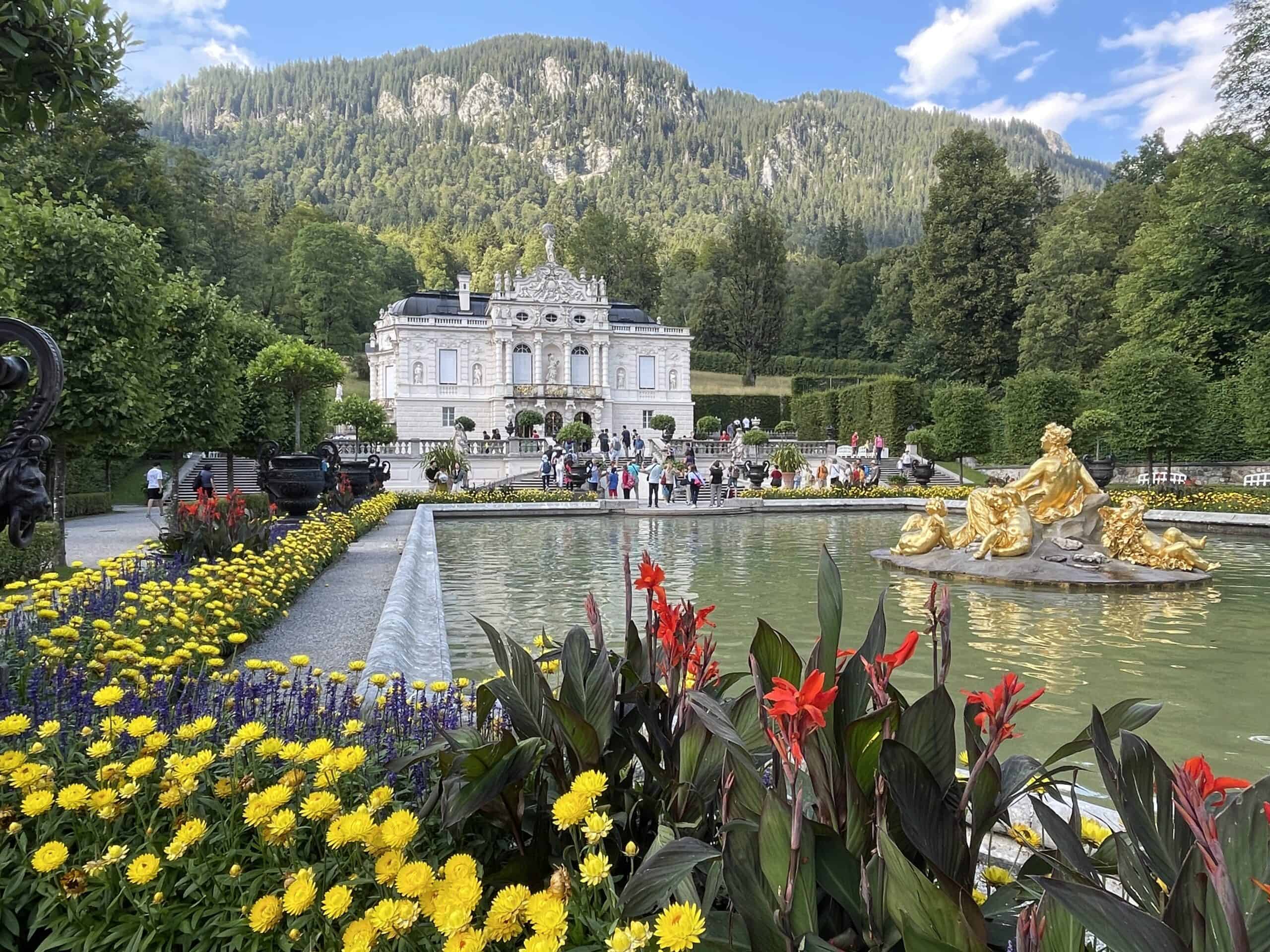
How Do I Visit Linderhof Palace (Schloss Linderhof)?
At a Glance: Linderhof is the smallest of King Ludwig’s palaces and the only one he lived to see completed. Located in the Graswang Valley near Oberammergau, about 1.5 hours from Munich, it is known for its ornate Rococo interiors and symmetrical gardens. Get there by train to Oberammergau then a connecting bus, or join an organized day tour from Munich.
Linderhof Palace is the smallest of King Ludwig’s palaces but interestingly, it’s the only palace he lived to see finished.
Located in Graswang Valley near the Ettal village, Linderhof Palace is around an hour and a half away from Munich.
You can easily get here by taking a train to Oberammergau and then a connecting bus to Linderhof. I’ve visited both on a day trip. But if you’re checking off multiple castles from your bucket list, you can book this day tour that brings you directly to both Linderhof and Neuschwanstein by bus.
This palace is known for its symmetrical architecture and spacious landscape. The interiors are decorated with Rococo motifs and ornate dining rooms and bedrooms.
The free castle park alone is worth seeing for the fountain shows in summer. There is also a nearby castle hotel and a small bistro in a souvenir store.
Linderhof offers several ticketing options depending on what you want to see — the full palace and park buildings, park buildings only, or the Royal Lodge separately. Note that in winter only the palace itself is open. For current prices, visit the official Linderhof Palace website.
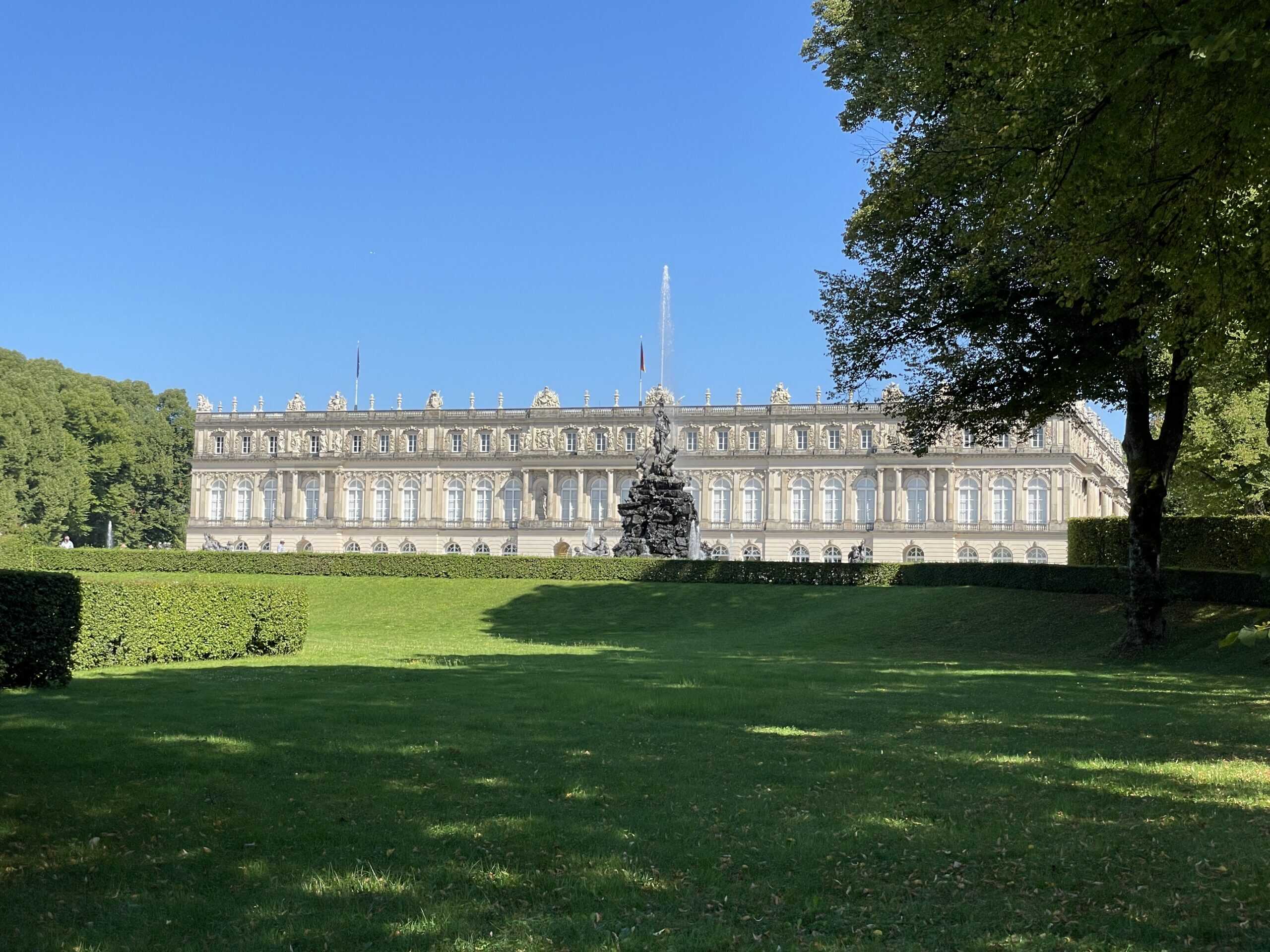
How Do I Visit Herrenchiemsee Palace (Schloss Herrenchiemsee)?
At a Glance: Herrenchiemsee is King Ludwig’s tribute to Versailles, built on an island in Lake Chiemsee and famous for its grand Hall of Mirrors. It can only be reached by ferry from Prien am Chiemsee or Gstadt, making it the most logistically involved of the five palaces. Many visitors opt for an organized day tour from Munich to simplify the trip.
Herrenchiemsee Palace was born out of Ludwig’s desire to pay homage to Louis XIV, the French Sun King. Inspired by the Palace of Versailles, he based this palace on French architecture. There’s even a reproduction of the iconic Hall of Mirrors inside!
But what makes the palace is its unusual location. It’s located in the middle of an island in Lake Chiemsee and can only be reached via boat. Book this day tour with skip-the-line tickets and enjoy a trip across the water to Herrenchiemsee Island.
If you’re fascinated by King Ludwig, there’s also a museum inside showcasing his valuable possessions like his stage models of the operas of Richard Wagner and sketches of his building projects.
Herrenchiemsee offers separate admission for the Augustinian Monastery, the King Ludwig II Museum, and the palace itself, or a combination ticket that includes a guided palace tour. Note that the ferry to the island is not included in any ticket price. For current prices, visit the official Herrenchiemsee Palace website.
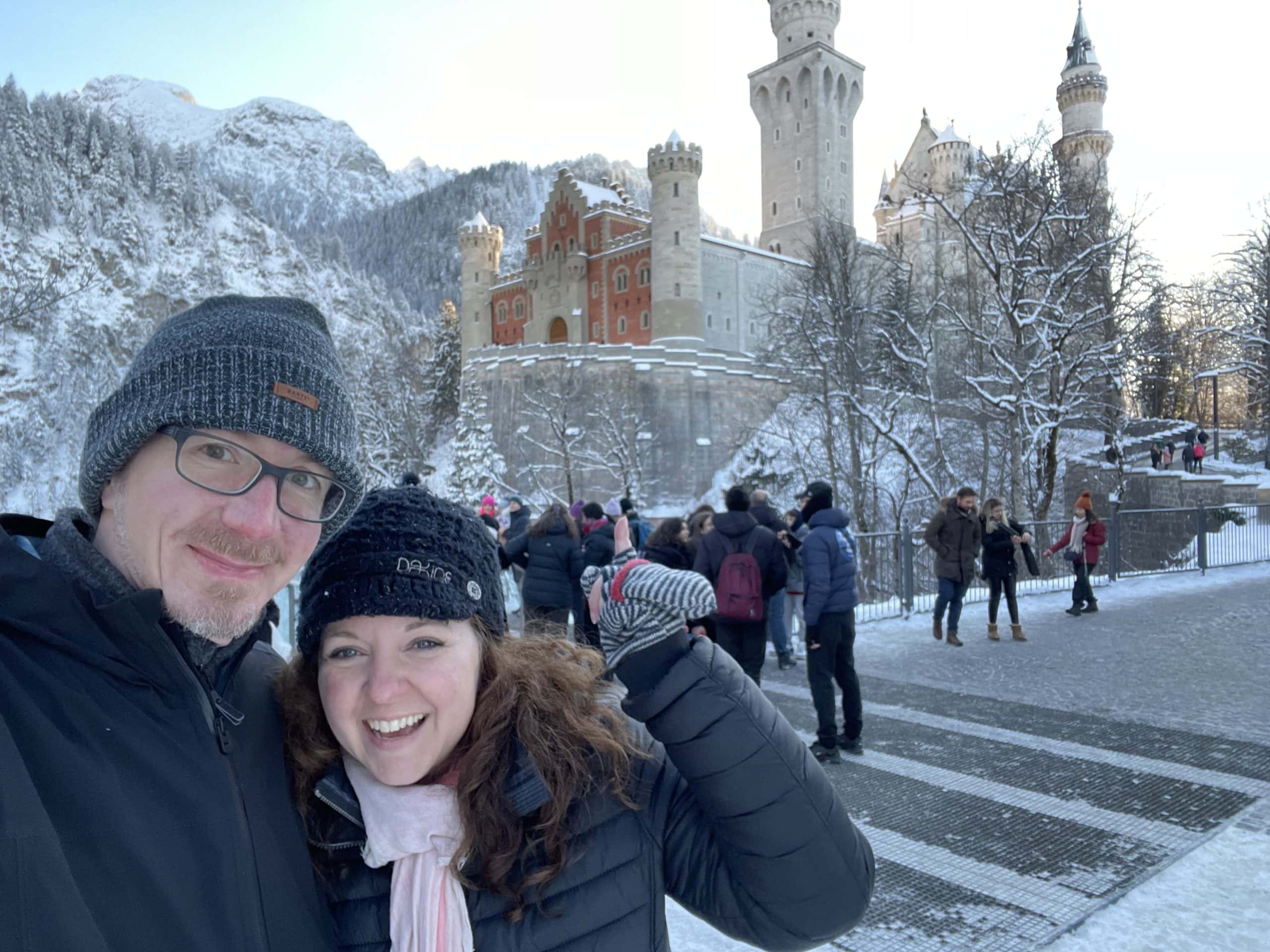
How Do I Visit Neuschwanstein Castle (Schloss Neuschwanstein)?
At a Glance: Neuschwanstein Castle sits in the Bavarian Alps near Füssen, about 2 hours from Munich, and is widely believed to have inspired Disney’s Sleeping Beauty castle. The interior can only be visited on a guided tour, which must be booked weeks in advance. The village of Hohenschwangau at the base also has Hohenschwangau Castle and the Museum of the Bavarian Kings.
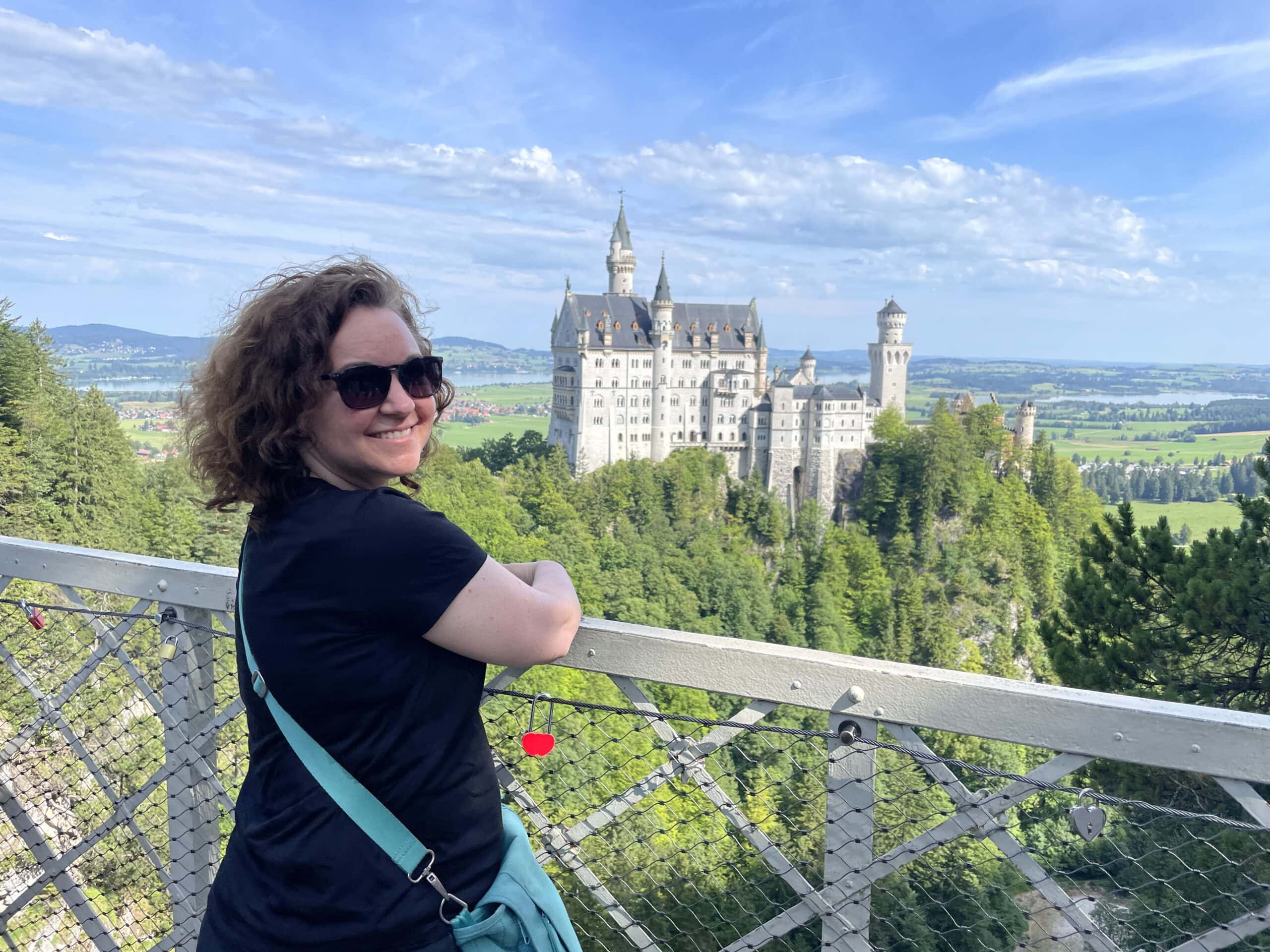
No discussion about King Ludwig’s castles is complete without Germany’s Neuschwanstein Castle. This famous castle is located around 2 hours away from Munich near the town of Füssen and makes for a popular day trip from Munich.
It’s a popular day trip from Munich via train and bus to Hohenschwangau village or by car. See our post Tips for Planning Your Neuschwanstein Day Trip from Munich to book a guided day trip from Munich.
King Ludwig never got to complete the castle, but the inside is still full of highlights. In your guided tour, you’ll get to see his opulent Gold throne room with no throne, the luxurious chandeliers in Singer’s Hall, the famous dining room, and the paintings of medieval legends.
But what attracts millions of visitors per year is its iconic exterior. Sitting at the foothills of the Bavarian Alps and towering over the Alpine lakes and valleys, Neuschwanstein is straight out of a storybook.
It’s no wonder that Walt Disney himself was rumored to have modeled the Sleeping Beauty castle after it. Seeing the inspiration of these Disney castles in real life is one of the best experiences!
While here you can also visit Hohenschwangau Castle, Ludwig’s childhood home, and the Museum for Bavarian Kings. During summer you can do nature activities like hiking through Pöllat Gorge or walk around or swim in Alpsee Lake.
Neuschwanstein, Hohenschwangau Castle, and the Museum of the Bavarian Kings are each ticketed separately, with combination tickets also available. For current prices and to book guided tour tickets in advance, visit the official Bavarian Palace Administration website!
Frequently Asked Questions
Can you visit Neuschwanstein Castle without a Tour?
The inside of Neuschwanstein Castle can only be visited with a guided tour. The castle offers live and audio guided tours in German and English led by their own personnel. You can, however, walk up to the castle to see the outside and visit Marienbrücke (Mary’s Bridge) for free. Check out our recommended guided Neuschwanstein day trips from Munich here.
How Hard Is It to Walk to Neuschwanstein Castle?
The walk up to the castle is not necessarily hard but it does take time. It’s an uphill walk that takes around 45-60 minutes from the ticket center (where the bus from Füssen stops and near the parking lots).
Be sure to give yourself plenty of time to walk up to the castle! The area is beautiful and you’ll want to stop and take lots of photos. Keep an eye on the time, because you do not want to miss your entry time into the castle. I’ve seen people turned away after arriving 10 minutes past their timed entry!
Can you do Neuschwanstein as a day trip from Munich?
Yes, a Neuschwanstein day trip is one of the most popular day trips from Munich. The journey takes about 2 hours each way by train to Füssen, followed by a bus or taxi to Hohenschwangau village, and then a walk up to the castle. Book your guided tour tickets well in advance, as the castle sells out weeks ahead, especially in summer. Check out our recommended guided Neuschwanstein day trips from Munich here.
What is the best time of year to visit King Ludwig’s palaces?
Late spring and early fall (May, June, September, October) offer the best combination of good weather and smaller crowds. Summer is the busiest season, particularly at Neuschwanstein. Winter is quieter and atmospheric, though some areas of Linderhof and the palace parks may be closed.
Do you need a car to visit King Ludwig’s palaces?
No, all five castles and palaces are reachable by public transportation from Munich. The two Munich palaces are served by tram and bus, Neuschwanstein and Linderhof are accessible by train and connecting bus, and Herrenchiemsee requires a train and ferry. If you get the Deutschland-Ticket, you can use that to visit all of the castles and palaces. We’ve visited all of these sites by public transit and had no problems.


Very well documented and presented with ease for readers. Keep it up.