
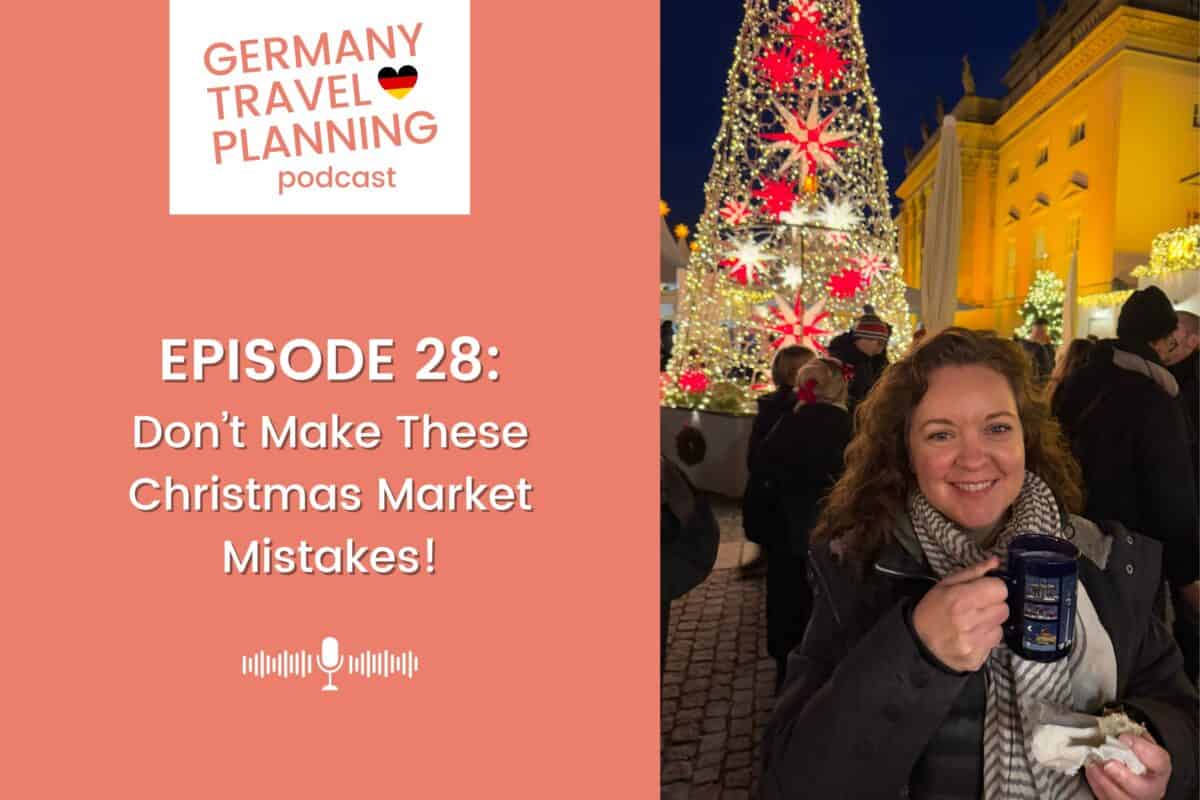
Don’t Make these Christmas Market Mistakes!
This post may contain affiliate links. Read my disclaimer policy.
If you want to experience the magic of Christmas markets, Germany and Austria are hands down the best places to go.
But there are some things you need to know ahead of time so you don’t make some very common mistakes that many travelers don’t realize they’re making until it’s too late.
Aaron and I have visited hundreds of markets all over Germany and Austria over the past 35+ years. Here are 7 common Christmas market mistakes and how to avoid them, so you can enjoy everything this holiday tradition has to offer.
This article is also available as the Germany Travel Planning podcast episode 28. Use the player below to listen or continue reading the article below. See episode transcript on Apple podcasts


Quick Answer
The biggest Christmas market mistakes travelers make are assuming markets run through Christmas Day, only visiting the famous markets, underpacking for the cold, and booking hotels too late. To get the most out of your trip:
- Arrive before December 23rd, most markets close before Christmas Eve
- Mix large, famous markets with smaller local ones
- Dress in waterproof layers and supportive shoes
- Book hotels as early as possible, city-center options sell out fast
- Slow down, eat the food, and visit each market both day and night
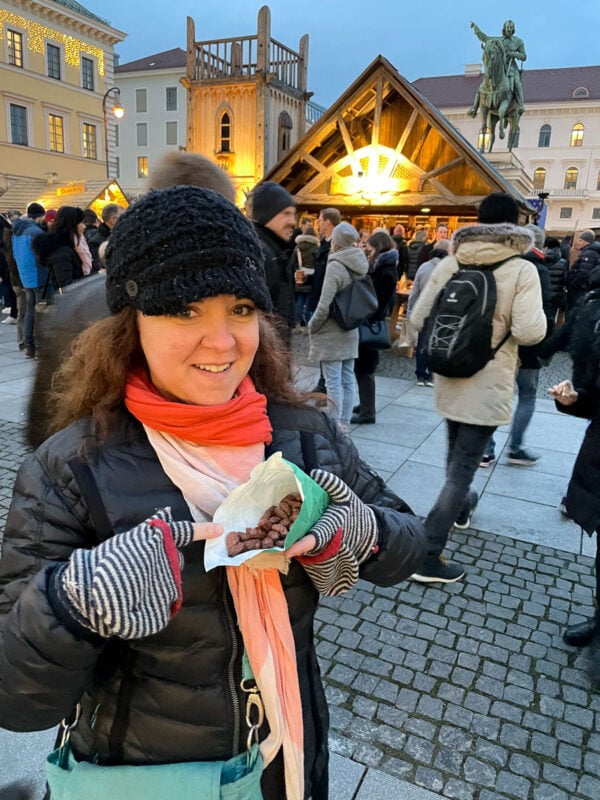
Mistake #1: Assuming All Christmas Markets Run Through Christmas
One of the biggest surprises for first-time visitors is that most Christmas markets close before Christmas Day, or even Christmas Eve, and sometimes the day before.
If you show up in Germany on December 24th expecting peak Christmas market magic, you’re going to be disappointed, because most markets will be closed or in the process of closing.
Most markets start in late November and wrap up by December 23rd, or possibly the 24th. Some end even sooner, some are only open on weekends, and some run only on specific dates during the season.
A few do stay open through New Year’s. There are a couple in Berlin, one in Cologne, and a few others, but they’re definitely the exception, not the rule.
🇩🇪 Insider Insights
- If visiting Christmas markets is your priority, plan to arrive well before December 23rd.
- Look up the exact dates for every market you want to visit and don’t assume they’ll all be open when you arrive.
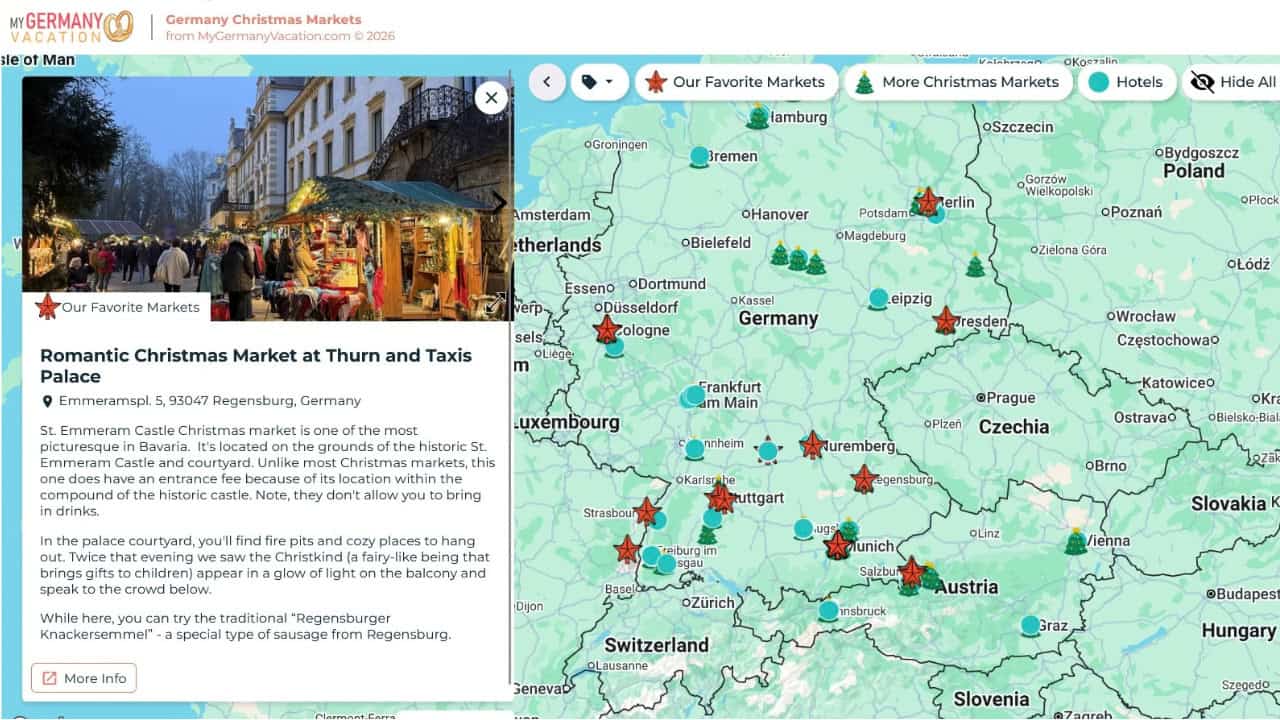
- Still trying to figure out which of Germany’s 3000+ markets to include in your itinerary? The DIY Germany Travel Planner makes it a lot easier, with a curated map of our 100 recommended Christmas markets, our recent photos and insider insights for each one, and our recommended accommodations, so you can plan your adventure with confidence.
Mistake #2: Only Visiting the Big, Famous Markets
That isn’t to say you shouldn’t visit the big, famous markets, like the ones in Nuremberg’s old town or Munich’s Marienplatz. Just…don’t only visit those.
There are thousands of remarkable Christmas markets in Germany, and many of them are smaller local markets, neighborhood markets, or markets with a specific theme or unique and picturesque setting.
The big markets have their upsides: they’re easy to find, right in the city center, and they have all the typical Christmas market things. Some have ice rinks or stunning light displays. If you’ve never been before, they’re going to feel beautiful and magical.
But the downside is that they can get really crowded, especially on weekends and evenings closer to Christmas, and after visiting a few, they can start to feel the same. And sometimes they can feel a bit touristy, with a lot of mass-produced items.
The smaller markets, the neighborhood markets, and the themed ones have a charm all their own. They’re sometimes less crowded, and some still feel like what it was like to go to the markets before they became so popular.
Balancing the popular markets with some under-the-radar gems are what make a Christmas market trip truly memorable. That’s exactly why we include the best of both on our curated Christmas market map in our DIY Planner! Plus, we include our photos so you can get the feel of each market and choose the ones you’re most drawn to.
🇩🇪 Insider Insights
- Plan your trip so you’re visiting a variety of markets. Having contrasting types of markets on your itinerary makes for a more memorable experience.
- If you do visit a popular market, go when it first opens if you want to experience it without the crowds.
- Building a Christmas market itinerary that balances the famous ones with the under-the-radar gems is one of our favorite things to do for clients. Let us build one for you!
Mistake #3: Not Being Ready for the Weather
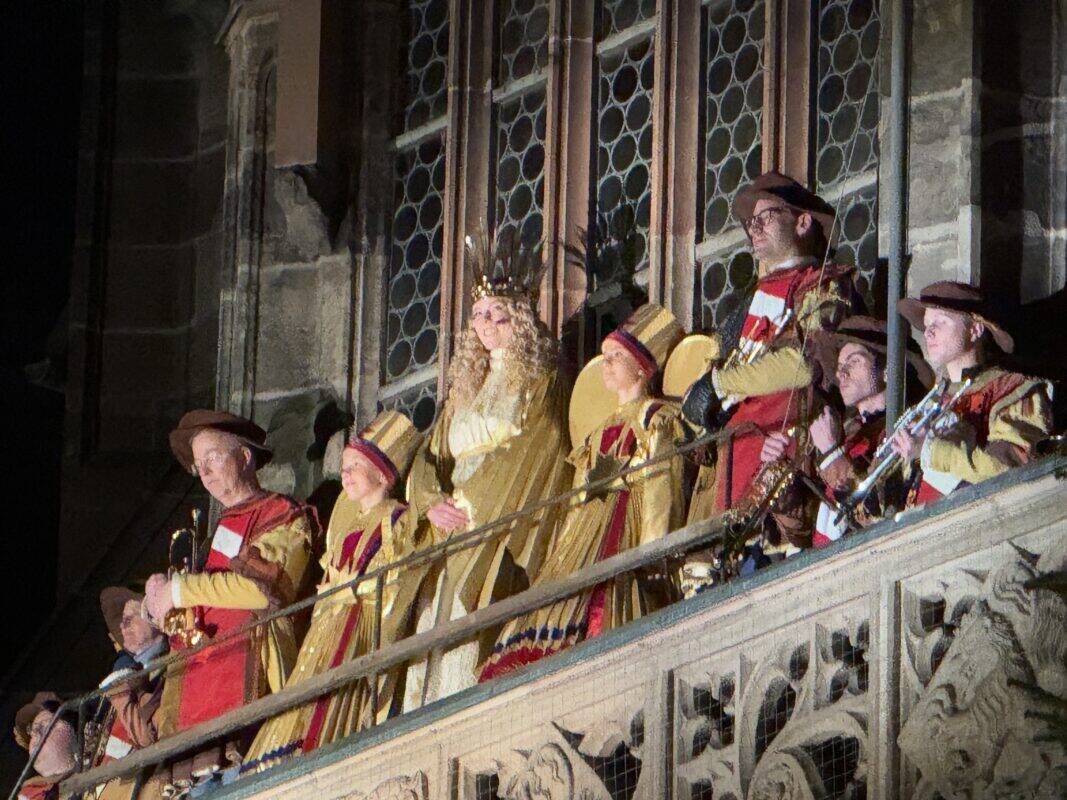
Christmas markets are outdoors, with minimal cover and very few places to sit. You’re going to be doing a lot of walking and a lot of standing. It’s not nearly as cold in Germany as it used to be, but you should still be prepared for anything, from warm sunny days to rain, snow, slush, and freezing temperatures after the sun sets.
Layers are the best approach, especially if you’re going to be out during the day and staying after dark, or moving between outdoors and warm indoor spaces. It can get very hot inside a store, museum or restaurant, and if you can’t easily remove a layer, you’ll be miserable. Been there, done that!
Footwear is just as important. You’re going to be walking and standing on cobblestones all day, and it could rain or snow. A pair of waterproof, supportive walking shoes is essential. The standing is often harder on your feet than the walking, so don’t underestimate this one.
🇩🇪 Insider Insights
- Pack layers, a hat, scarf, and mittens. You may not need them all day, but you’ll want them once the sun goes down.
- Bring at least one pair of waterproof, supportive shoes. Your feet will thank you.
- See the 15 things we always pack for Germany and Aaron’s men’s packing guide.
Mistake #4: Trying to Visit Too Many Markets
Germany is a lot bigger than most people realize, some towns are better connected than others, and winter travel can slow things down.
Cramming in more markets does not make for a better trip!
The worst thing you can do is skip the research part of travel planning and simply race through a bunch of cities, only hitting the old town market in each one. After a couple of days, everything will blur together and the markets will feel mundane rather than magical.
Christmas markets aren’t just about the food or the things you can buy or collecting all the cute market mugs. Sure, that’s a big part of it! But more than that…what makes the markets so magical is a feeling.
Of wonder, beauty, optimism, hope, connection. And that feeling comes from taking the time to slow down and actually experience the markets, not just consume them.
One thing that makes a huge difference in experiencing the markets: visit the same market during the day and at night.
During the day (especially right when it opens) is a great time to browse the stalls without huge crowds.
In the evening, when the lights come on and people gather, it becomes something else entirely. So build in time to hang out and enjoy the markets…get something to eat, stand around a table with some Glühwein, and connect with the people you’re with.
🇩🇪 Insider Insights
- Experience rather than simply consume markets.
- Visit during the day and in the evening whenever possible.
- If you’re not sure how to build a realistic Christmas market route, let us do it for you! With a custom itinerary, we’ll figure out the right pacing, which markets to visit, and how to get the most Christmas magic out of your trip.
Mistake #5: Not Booking Hotels in Advance
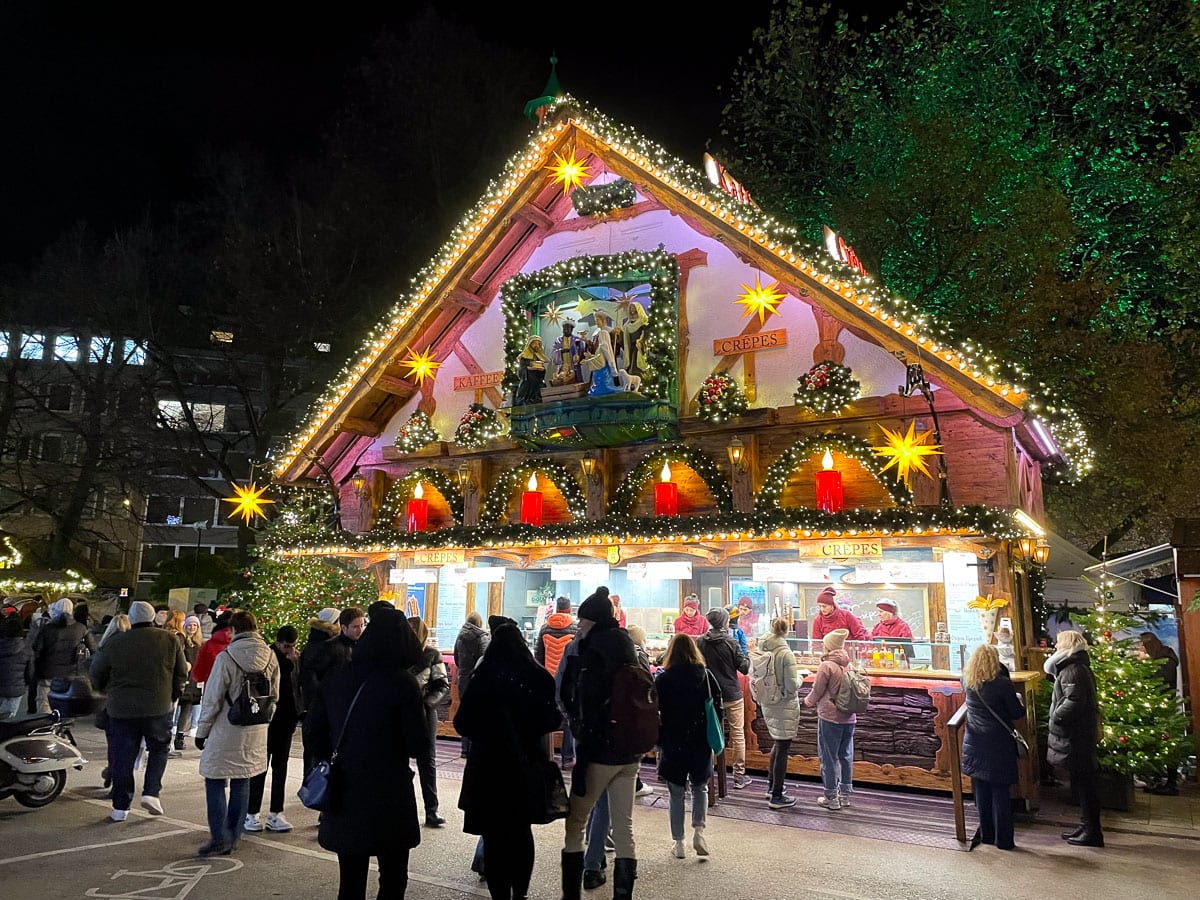
Christmas markets are incredibly popular now, and it can be really difficult to find a hotel, especially if you want to stay in the old town near the markets. Especially in the most popular destinations. If you wait too long, you may find all the best options already gone. It’s happened to us more than once!
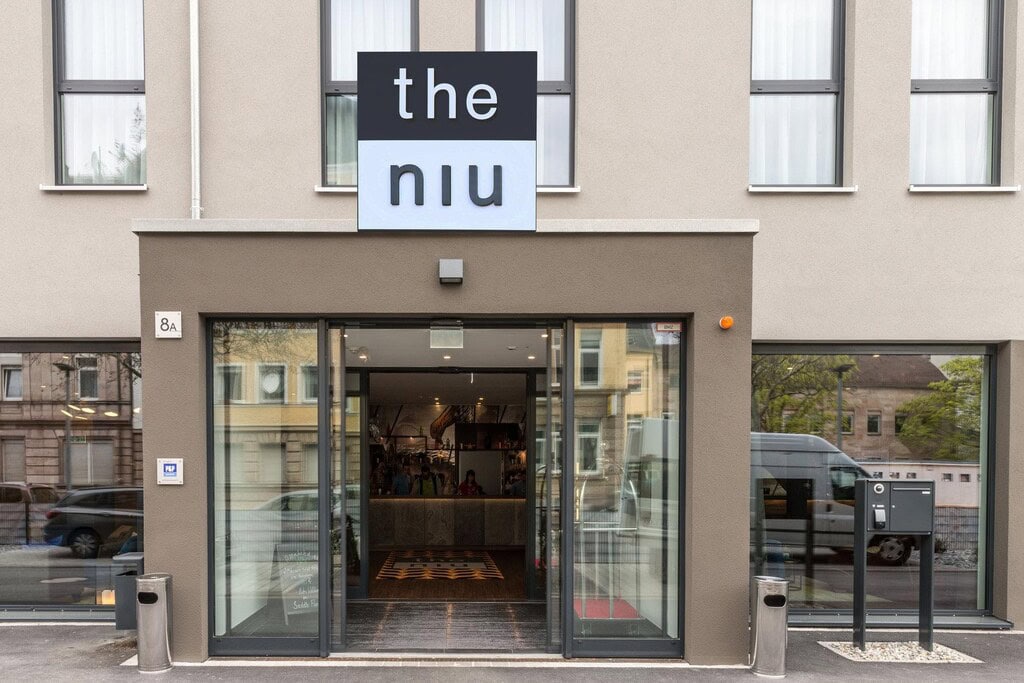
If you can’t find something near the markets, look outside the old town. When we went back to Nuremberg last December, we couldn’t find anything decent or affordable anywhere near the Christmas market. We ended up staying at this hotel in a suburb called Fürth, just a short local train ride away, and it was wonderful!
The hotel was comfortable, we saved money, and as a bonus, Fürth had a wonderful little local market of its own. We enjoyed spending an hour touring their traditional market, a kids’ market, and even a medieval market before we hopped on the train to our next destination. Sometimes staying outside the city center leads you to the best surprises!
🇩🇪 Insider Insights
- Book your hotels as early as possible for the best options.
- If the city center options are booked, look at nearby suburbs with good public transit connections. You’ll often save money and discover a more authentic experience along the way.
- If you’re looking for great places to stay near Christmas markets, look at the Christmas market map in the The DIY Germany Travel Planner so you can see where our recommended accommodations are in relation to your must-see markets! You can also look at our hotel starter guides.
Mistake #6: Missing out on food and drinks
One of the best parts of the Christmas market is the food and drinks. But with so many options and a lot of unfamiliar names, it’s easy to either miss something amazing. Here are some of our favorites to get you started:
- Kartoffelpuffer: Crispy potato pancakes served savory or sweet with garlic sauce or apple sauce.
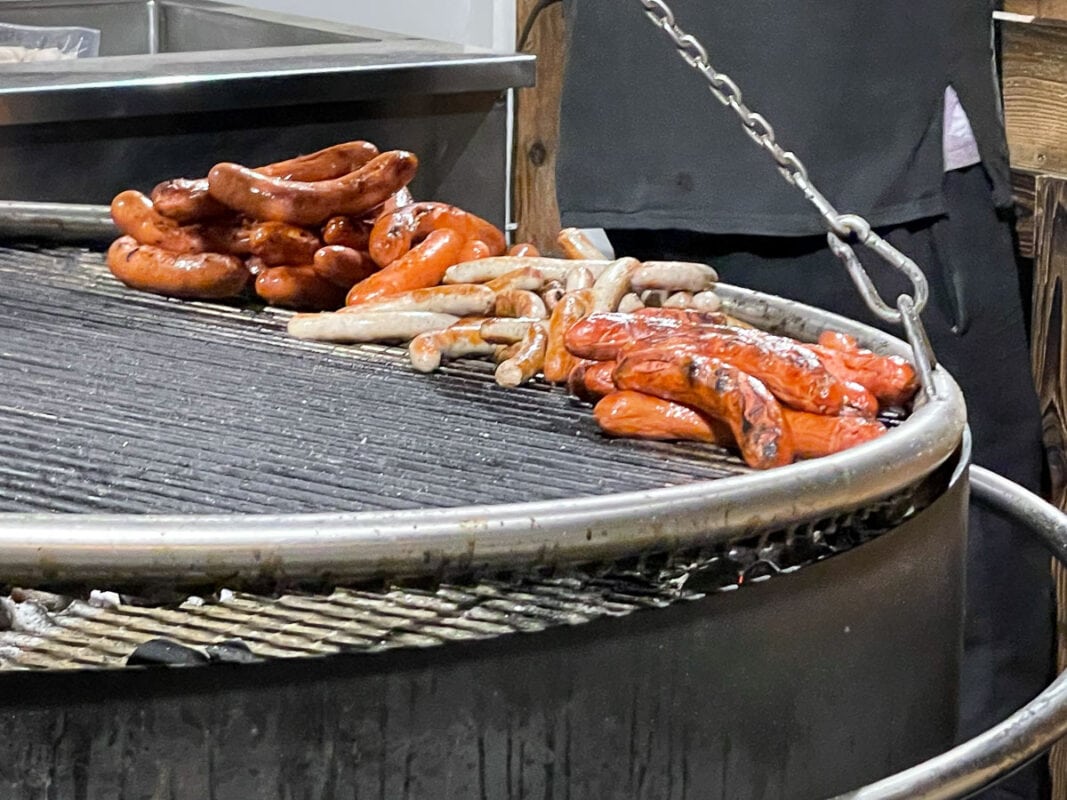
- Bratwurst: Found at pretty much any market. Budget-friendly and delicious, especially with mustard.
- Gebrannte Mandeln: Roasted almonds in a crunchy cinnamon-sugar coating. A Christmas market staple you’ll find everywhere. So good when still warm!
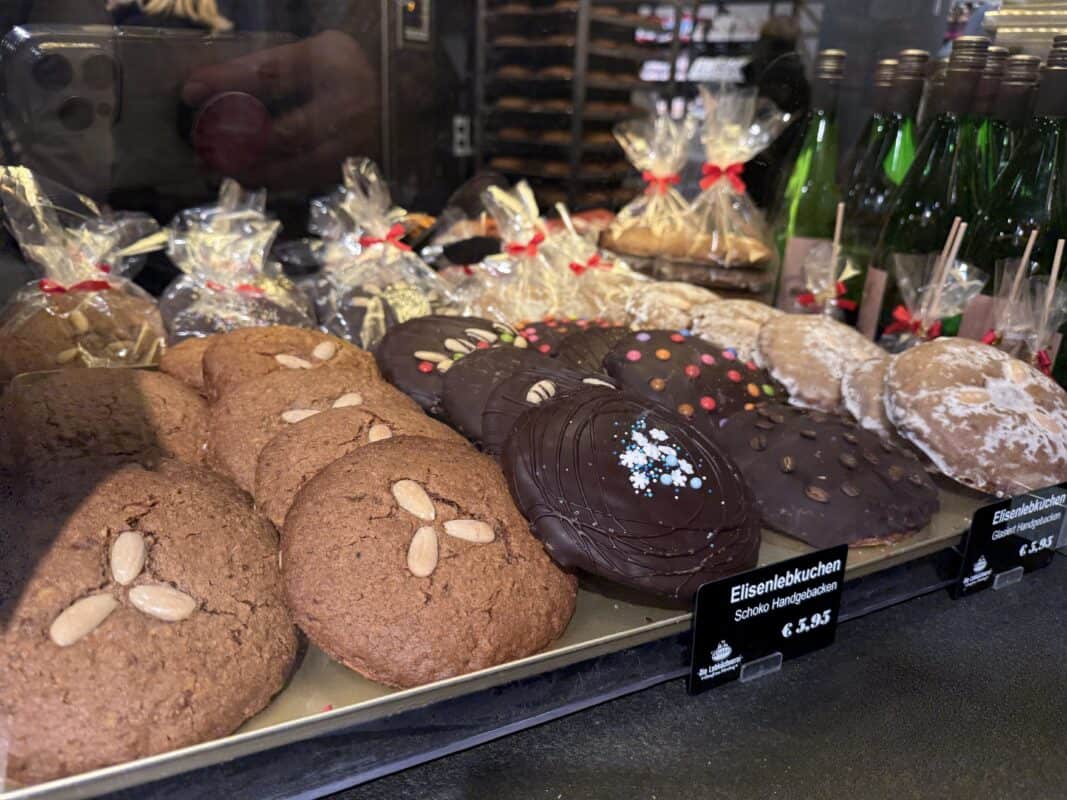
- Lebkuchen: German gingerbread, usually round and glazed or covered in chocolate. Softer and richer than what you’d find in the US. You won’t find these at every market. Nürnberg is the home of Lebkuchen so try allll the varieties there!
- Glühwein: Hot mulled wine. Many markets now offer unique local varieties like blueberry, or white mulled wine. Non-alcoholic versions are also available.
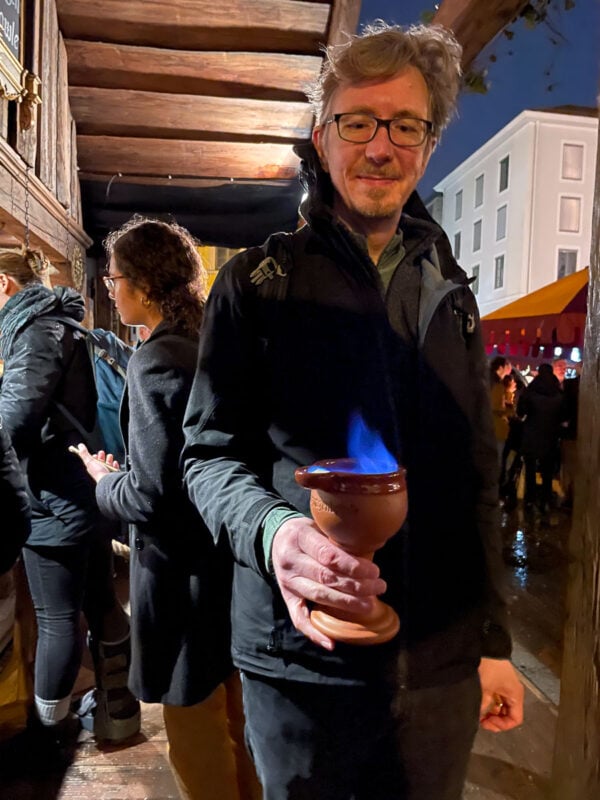
- Feuerzangenbowle: A mulled wine drink served to you on fire!
Some things are regional and you won’t find them at every market. So if you see something you want to try, get it right then. You are not guaranteed to see it again.
I made this mistake just last year! There was something I wanted to try but didn’t (can’t remember what it was now), thinking I’d get it at the next market. I never found it again. It was a huge bummer!
🇩🇪 Insider Insights
- Treat the food and drinks as part of the experience, not an afterthought.
- Take a photo of each thing you eat so you can remember what you ate and at which market.
- If you’re not sure what to try at the markets, check out the top foods checklist in the DIY Germany Travel Planner so you know what to look for before you go.
Mistake #7: Only Visiting Christmas Markets on Your Trip
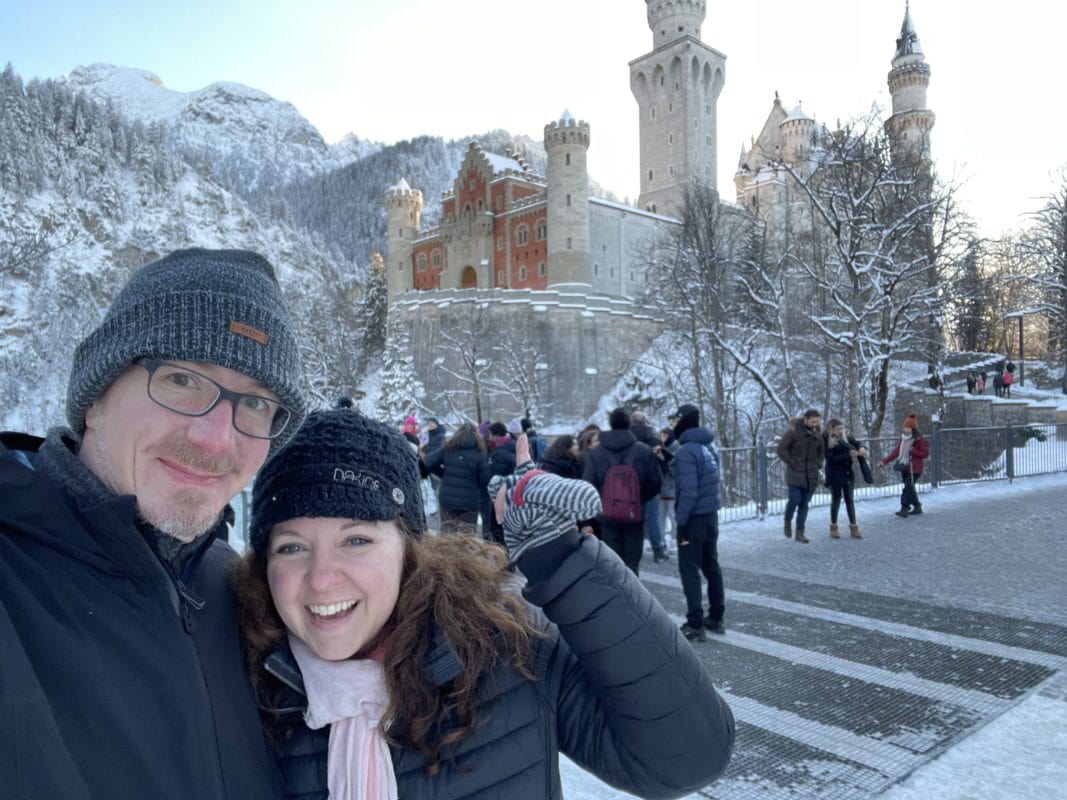
The Christmas markets are magical…but they are not the only reason to visit Germany in December. And if you visit too many of them, it can get old. To avoid Christmas market fatigue, make sure to weave in other experiences: a castle, a museum, a thermal bath, a winter hike, a tour or just some time in cozy cafés and restaurants.
All of these things add depth to your trip and give you a break from the crowds, so that when you do go back to a market, it still feels special and magical.
🇩🇪 Insider Insights
- The markets will feel even more magical when they’re the highlight of your day, not the whole day.
- A well-built itinerary balances market time with the kind of experiences that make Germany unforgettable. Let us build one just for you!
Ready to Plan Your Perfect Christmas Market Trip?
Aaron and I have visited hundreds of markets all over Germany, Austria, and the Alsace over the past 35+ years, so we know exactly how to build a Christmas market itinerary that feels magical rather than rushed, and memorable rather than repetitive.
We’d love to help you make your Christmas market trip everything you’re dreaming of! All you need to do is decide whether you prefer to…
Be the Architect of Your Trip
If you love planning your own adventure, the DIY Germany Travel Planner gives you everything you need to build a Christmas market trip you’ll never forget. Our curated map of 100 recommended markets includes our real photos and insider insights for each one, plus hotel recommendations, a top foods checklist, and much more, so you can stop guessing and start getting excited. Get access here!
Let Us Do the Heavy Lifting
Rather have a destination expert handle the research, the route, and the logistics? With our Complete Custom Itinerary service, we figure out which markets to visit, how to pace your trip, where to stay, and how to get around, so all you have to do is fine-tune, book, and enjoy. Get started here!
Either way, you’ll head to Germany with a plan you’re excited about and the confidence to enjoy every magical minute of it!
Helpful Links From This Episode
- For our packing lists, take a look here, here, and here.
- DIY Germany Travel Planner (including our new interactive Christmas Market Map featuring our top picks, our favorite smaller/local markets, and the best hotels for visiting markets!)
- Custom itinerary service
- One-on-one trip planning consult service
- Itinerary review service
Frequently Asked Questions
Do all German Christmas markets run through December 25th?
No. Most Christmas markets in Germany and Austria close on December 23rd or earlier. A small number run through New Year’s, including a couple in Berlin and one in Cologne, but these are exceptions. Always check the exact dates for each market before you travel.
What is the best time to visit Christmas markets in Germany?
The first two weeks of December offer a good balance of full market operation and manageable crowds. Weekday mornings are quieter than weekend evenings. If you want to experience markets close to the Christmas atmosphere, aim for the week of December 8th through 15th, before the biggest holiday rush.
Are German Christmas markets worth visiting if you don’t drink alcohol?
Yes. Most markets offer non-alcoholic versions of Gluhwein (hot mulled wine), as well as hot chocolate, apple cider, and other warm drinks. The food stalls, artisan goods, lights, and atmosphere are all fully enjoyable without alcohol.
How much money should you budget per day for a Christmas market trip in Germany?
Budget roughly 20 to 40 euros per person per day for food and drinks at the markets, depending on how much you eat and drink. Souvenirs and market mugs (Gluhwein is often served in a collectible mug with a deposit) add to costs. Accommodation and transport are separate and vary significantly by city and how far in advance you book.

Hallo Cate and Aaron
So nice to see the Weihnachtsmarkt additional to your offerings. I joined, Magical Christmas Markets of Europe, on Facebook a few years ago. I found this sight to be borderline hysterical when it came to proper clothing attire. One would think that these markets took place in Antarctica with recommendations that include heated vests, expensive boots, 100 layers… pretty funny. Jeremy Pike is a prominent member, he seems to have been to every market in Europe and puts out a calendar of opening and closing dates. Not sure if he includes Krampus runs… Anyway, great addition! BTW, I’m from Stuttgart originally, my family moved to MA when I was 4, I try to get back as often as I can.
Tschüss
Ellen
Hi Ellen! We were just in Stuttgart for the Wasen and Ludwigsburg pumpkin festival! I lived there for a while when I was 19/20 so it’s always fun to go back. I remember a few decades ago when it used to get cold at the markets but over the past few years it hasn’t seemed as cold (except for a few evenings in very southern Germany). I didn’t even wear gloves at all during our 5 weeks in Berlin last December/January! Thanks for listening to our podcast and being part of our Facebook group 🙂