
Renting a Car and Driving in Germany: What You Need to Know Before You Go
This post may contain affiliate links. Read my disclaimer policy.
Renting a car and driving around Germany can open your itinerary to amazing sights and places and add flexibility to your itinerary. Germany is well-known for its Autobahn and high-performance vehicles, but it also has high traffic volumes, road construction, traffic jams, and its own driving customs.
If you’re wondering what it’s like to drive in Germany, how to rent a car, and what you need to do to drive successfully, Aaron shares his experiences and tips in this guide.
TIP: We rent a car on about half of our trips but we’re also huge fans of taking public transportation in Germany. If you’re trying to decide between driving and using public transportation, DIY Germany Travel Planner can help you decide on the best option for your itinerary.
Quick Answer
Driving in Germany is safe and a wonderful way to explore beyond the major cities. Rental cars are widely available from agencies like Europcar and Enterprise. You’ll need your home country driver’s license plus we highly recommend an International Driving Permit (IDP). Always watch for posted signs, especially entering small towns where speed cameras are common. We recommend starting your rental car search on Discover Cars and watch Tripiamo’s excellent driving tutorial before you leave so you can drive with confidence from day 1.
What’s Our Experience With Driving in Germany?
We’ve been renting cars in Germany and elsewhere in Europe for 25 years. About half of our trips to Germany are roadtrips, which means we’ve rented all kinds of cars from various airports and other pickup locations around the country. Aaron is our driver and he’s driven all over Germany and into other countries like France, Austria, and Switzerland.
Is It Safe to Drive in Germany?
Yes, driving in Germany is very safe!
All German drivers are required to take extensive theoretical and practical driving lessons to get their license. They can only do this once they turn 18 years old. The fees for driving school and exams are quite high.
These factors generally contribute to a consistent and responsible driving culture. While it’s true that every country has its fair share of bad drivers, Germany’s strict adherence to traffic rules and safety regulations makes for a safe experience.
Is It Easy to Drive in Germany?
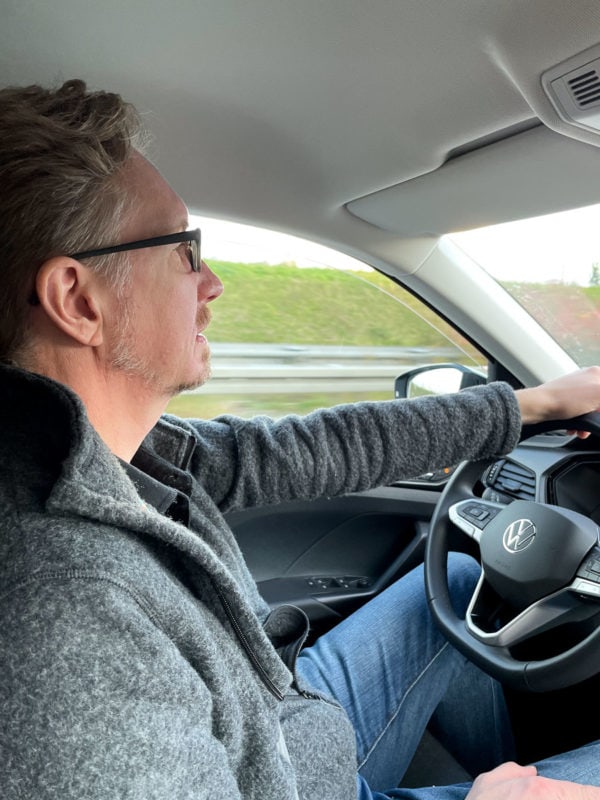
Yes, driving in Germany is generally easy. It may take some adjusting in the beginning, but you’ll get used to it after a few days.
One key factor is that Germany drives on the right side of the road, like most of the rest of continental Europe. This means oncoming traffic will be facing you on your left. It’s the same in the United States and many other countries, so if you’re used to that, it will feel familiar.
However, many German traffic regulations differ from other countries a great deal.
Thats why we recommend the excellent online interactive driving tutorial Driving in Germany Made Easy from Tripiamo. Many of our clients have used this and absolutely rave about it!
This video guide introduces important differences in approach to driving, laws, and common European-style traffic signs that can be hard to decipher just by looking at them. Not only will you feel more comfortable and confident from the moment you get into your rental car, you’ll be more likely to avoid tickets, fines, and speed traps. We wish we had this resource years ago!
In terms of navigation, Germany has an incredible road network with well-maintained highways (German autobahn) that connect major cities quite efficiently. The road sign system is comprehensive and standardized. Once you familiarize yourself with the most common signs, you shouldn’t have any issues recognizing and interpreting them.
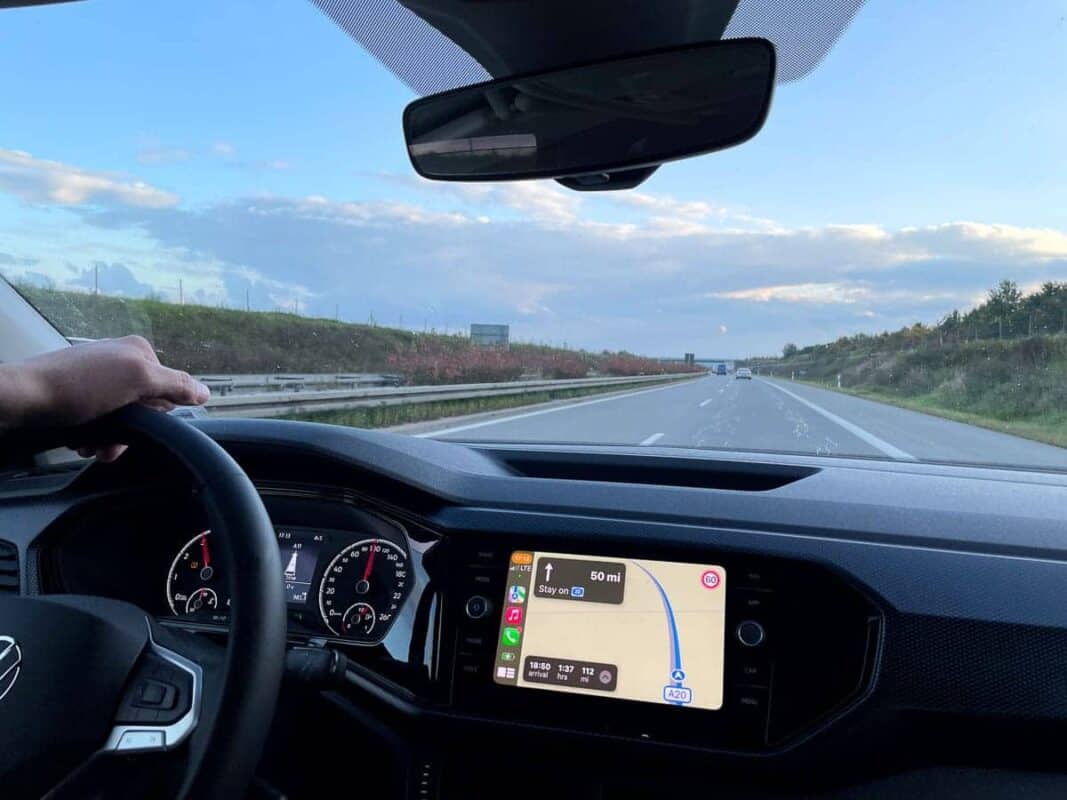
To get around, many rental cars come with a GPS, but you can typically connect your cell phone and use your preferred app. GPS will often (but not always) display the current speed limit on the dashboard in real time. We typically pair one or both of our phones to our rental car and then use google maps and sometimes Apple maps for navigation.
Like driving anywhere that’s not your home country, it’s always a good idea to take extra care and familiarize yourself with some of the road signs and general driving etiquette of the foreign country.
- Sharing the road safely with cyclists is a must. Many areas have a high volume of bicycles and scooters which requires extra care and attention from drivers.
- It’s also essential to stay informed about road conditions, especially if you plan to explore rural areas or mountainous regions.
- Before driving, check for road conditions for any construction zones or traffic updates that may affect your route.
- Depending on where you go, the weather conditions can also be unpredictable, so keep an eye on weather reports and forecasts. This will help you prepare for any sudden changes in the weather, like rain, snow or fog, which can impact visibility and road traction.
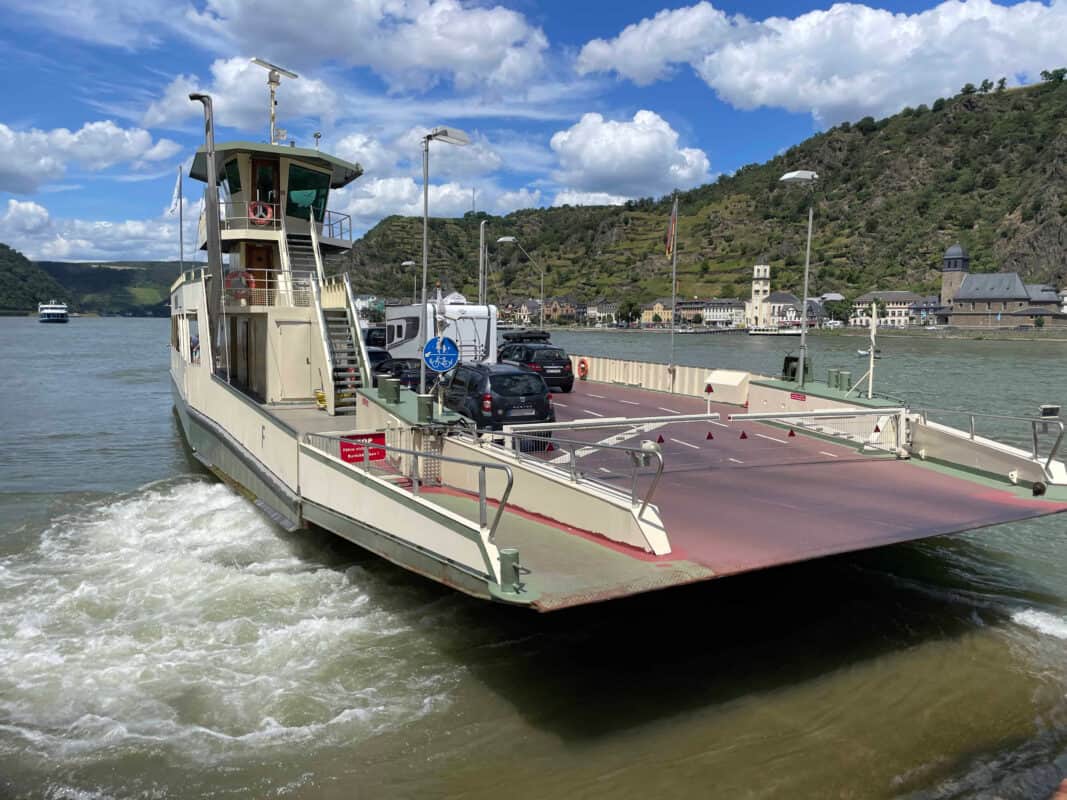 Rhine River Ferry
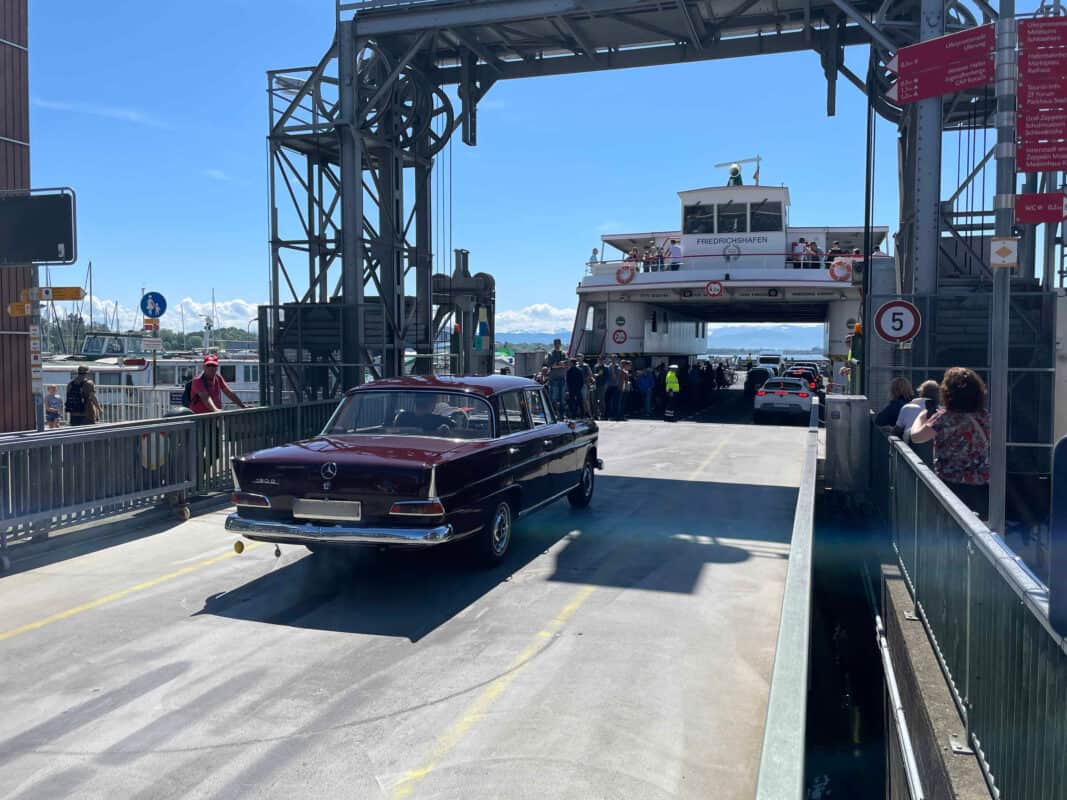 Lake Constance Ferry
Is It Easy to Rent a Car in Germany?
Yes. You should have no problem renting a car in Germany since it’s a popular choice for many travelers looking to road trip around the country.
The well-developed transportation infrastructure means you’ll find all the major international car rental companies at airports, train stations, and city centers, making it convenient and accessible to rent a vehicle at any point in your trip.
The most popular rental car agencies in Germany are Europcar, Sixt, Avis, Hertz, and Enterprise. These companies usually operate separately or as independent franchises from their international counterparts. We often use Europcar but also recommend looking at Discover Cars too for good comparison shopping.
How Can I Rent a Car in Germany?
One of our personal favorite platforms and where we start our rental car shopping is Discover Cars, an international car rental booking website that allows you to compare car rental deals from different companies so that you can choose the best one for your trip.
Using Discover Cars offers several advantages, like a wide selection of the type of vehicles, competitive prices, and the ability to compare offers from various companies in one place. They feature suppliers including major brands like Hertz, Europcar, Alamo, Enterprise, Sixt, Budget, and cover over 10,000 locations from over 140 countries.
Because they have direct contracts with these car rental companies, Discover Cars can negotiate good prices for their customers. They also offer free cancellation and there are no hidden fees. All mandatory fees, extra costs, or taxes are included upfront in the quoted price.
There are also different payment methods available. You can either make a small deposit upfront to reserve the car, and then pay the remaining balance directly to the rental company when you pick up the car. Or you can pay the entire cost of the rental when booking online. Over the years we’ve done both and haven’t had any problems or hassles. They also have a 24/7 multilingual customer service team to help you with any problems you may encounter.
We’ve found the reservation process simple and straightforward. First, input your location and dates on their website to see all the rental cars available from their partners. After finding the right option for you, book it and make sure to pay extra attention to all the rental conditions!
Usually, you can cancel for free up to 48 hours before the scheduled pick-up time. Once you’re at your destination, make sure you have all the necessary documents listed on the terms, pick up your car, and enjoy your trip!
On many trips we’ve also booked directly with Europcar. Europcar has many convenient locations across Germany (even in smaller towns and cities) and offers competitive rates on a variety of different vehicle types.
What Car Rental Insurance Do I need?
In German, rental cars include mandatory third-party liability insurance. This insurance covers accidents related to damage to anyone or thing outside the card.
However, when you travel to Germany, your personal car insurance is unlikely to provide coverage abroad. You’ll therefore want to get some form of Collision Damage Waiver (CDW) for Germany. This waiver covers most of the car if you are in a collision (some exclusions do apply). This coverage reduces any high deductible that you’d have to pay in the event the car is damaged.
There are several options for CDW:
- First, you can purchase collision coverage through the car rental company when you book. This provides some peace of mind and is an easy way to take care of it. It also tends to be more expensive. Read the fine print because the deductible can range from high/substantial (with some exclusions), to zero-deductible coverage (at a price).
- Second, you can get CDW as part of a larger or separate travel insurance policy you may have for your trip. Alternatively, there are third-party services such as Allianz and RentalCover that sell standalone policies that offer more competitive rates for CDW coverage for rental cars.
- Third, your personal credit card may include coverage if you use it to pay for the rental. You’ll need to check with your credit card company for specific terms and limitations. Coverage is not available for certain luxury or exotic cars and is limited to rentals of 31 consecutive days or less. This option is convenient and cost-effective but does present more work for you in the event of a collision.
We’ve used our Chase Sapphire Preferred card for renting cars many times. We decline the rental company’s collision damage waiver (CDW) and make the booking with that Chase card. Some car rental companies require proof the credit card’s rental coverage benefit.
Most of the time we simply tell them we have coverage through our Chase credit card but one time, when we picked up a car from Frankfurt airport, we were required to prove we had sufficient coverage. If you also plan to use your credit card’s coverage, you can download this rental letter of coverage document from the Chase website.
Another tip: check every part of your rental car for any dents or scratches. It’s easiest to use your phone to video or photograph the entire car before you head out and do the same when you return the car. That way, if you’re charged any surprising fees for damage, you can submit the photos or video.
We do this with every rental car. As I’m is getting the car ready to drive, Cate takes photos and a video of the entire car. Then, right before returning the car, I fill up the tank with gas while Cate takes photos and a video. So far we’ve not needed them but better safe than sorry!
Do I Need an International Driving Permit to Drive in Germany?
If you plan to rent a car in Germany and your license is not from any EU country, you should bring your home country driver’s license and obtain and bring an International Driving Permit (IDP).
Other nearby countries that require an IDP include Austria, Bosnia-Herzegovina, Greece, Germany, Hungary, Poland, Italy, Slovenia, and Spain.
The IDP functions as a translation of your regular driver’s license.
If you get into an accident or get pulled over, an IDP is an additional form of identification, and is usually recognized by police. The IDP is not a substitute for your regular driver’s license so it’s important to always carry both when driving. Note the minimum driving age in Germany is 18 years old.
In the U.S., you can apply for an International Driving Permit at your local AAA. To apply in person or by mail, review their steps and requirements at the AAA website. Online application is also available at AAA | International Driving Permits. The IDP is a paper document and is not available in digital format.
Can I Drive a Rental Car Into Other Countries?
Yes, it’s possible to drive your rental car into other countries, but there are some essential things to consider.:
- You should inform your rental company in advance since they often charge an additional cross-border fee.
- These fees can be per-trip, or per-country and the cost may vary by country.
- When you cross borders within the EU you will typically not see any border control station. We’ve only been stopped once when entering Switzerland from Germany.
- Be sure you have the necessary documentation and insurance coverage for cross-border travel including your driver’s license, international Drivers Permit and passport
- If you plan to drive in Switzerland or Austria, you’ll need to purchase a Vignette (toll).
Do I Need a Vignette for Germany?
No. The countries that require a vignette are Austria, Bulgaria, Czech Republic, Hungary, Moldova, Romania, Slovakia, Slovenia, and Switzerland.
Rental cars in Germany are unlikely to already have a vignette for Austria or Switzerland so you’ll more than likely need to by one if you plan to drive in either country.
The car we rented once from Konstanz did have a vignette for Switzerland but not Austria. But no other rental cars we’ve had already had one.
On one trip we purchased a 10-day vignette for Austria online after we picked up our rental car in Germany. The online application asks for the rental car license plate number and will register the vignette electronically. Vignettes are also available for purchase at gas stations near the border.
Ask at the car rental office when you pick up your car if you have any questions about vignettes or other tolls.
What Type of Car Should I Rent in Germany?
Nowadays automatic transmissions, manual transmissions and electric vehicles (EVs) are common-place and are widely available from most rental agencies.
Sometimes you may find that stick shift/manual transmission will have a slightly lower price or include additional vehicle models. We recommend using what you’re most comfortable with.
We prefer a compact- or intermediate-sized car or small SUV. At home we drive a Honda CRV so we usually rent a similar type and size of car when we’re in Germany. We used to always rent a manual but these days, especially in the winter, we lean towards automatics because it’s just one less thing to think about while driving.
Keep in mind that while driving in Germany you may go up steep mountains, drive along narrow gravel roads, rural 2-lane roads, and encounter very tight parking spaces. This would not be a good time to learn stick shift!
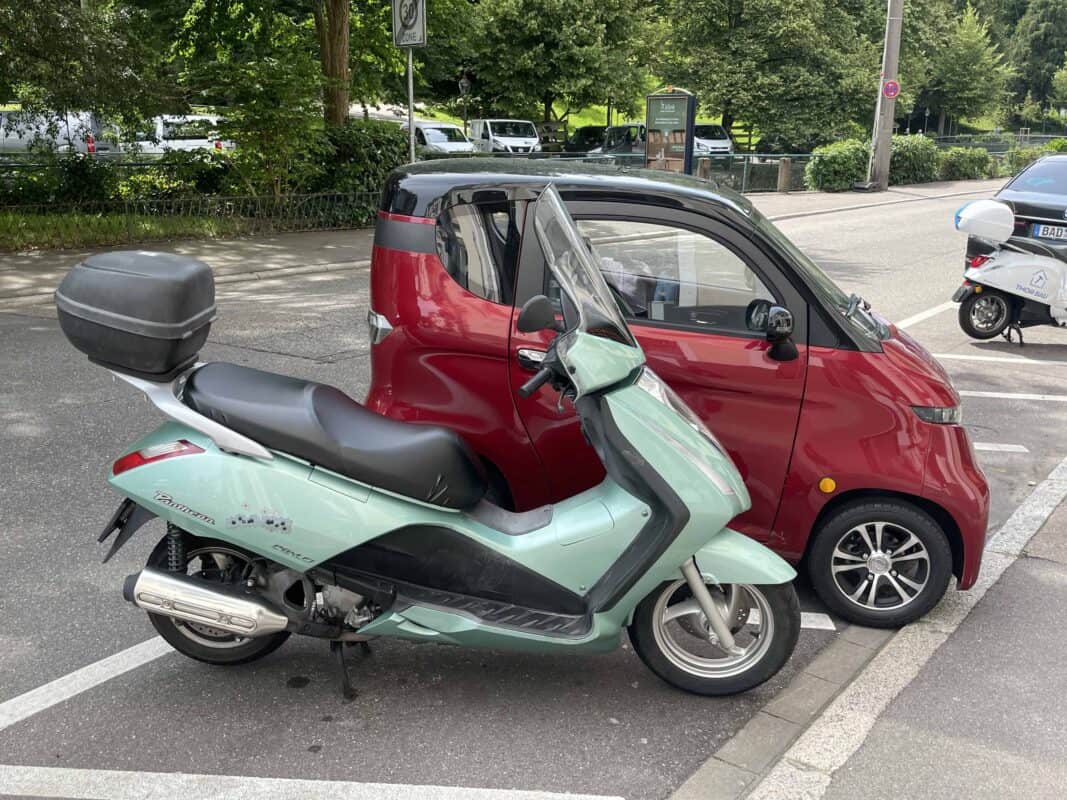
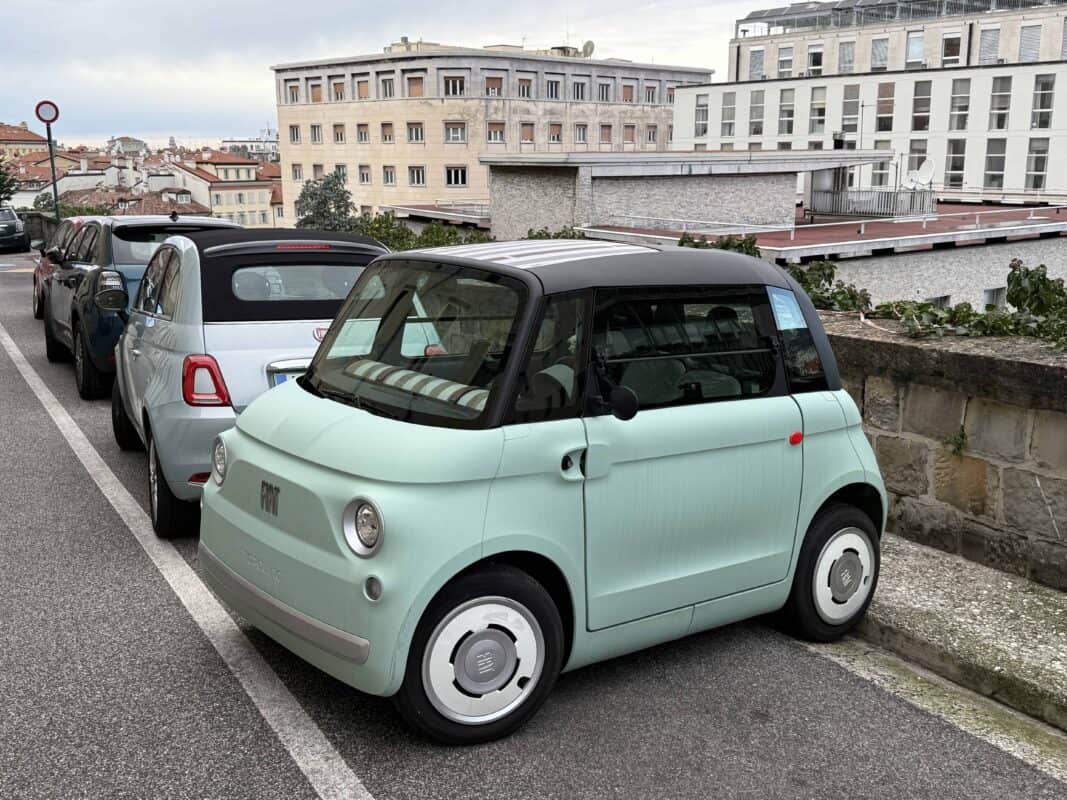
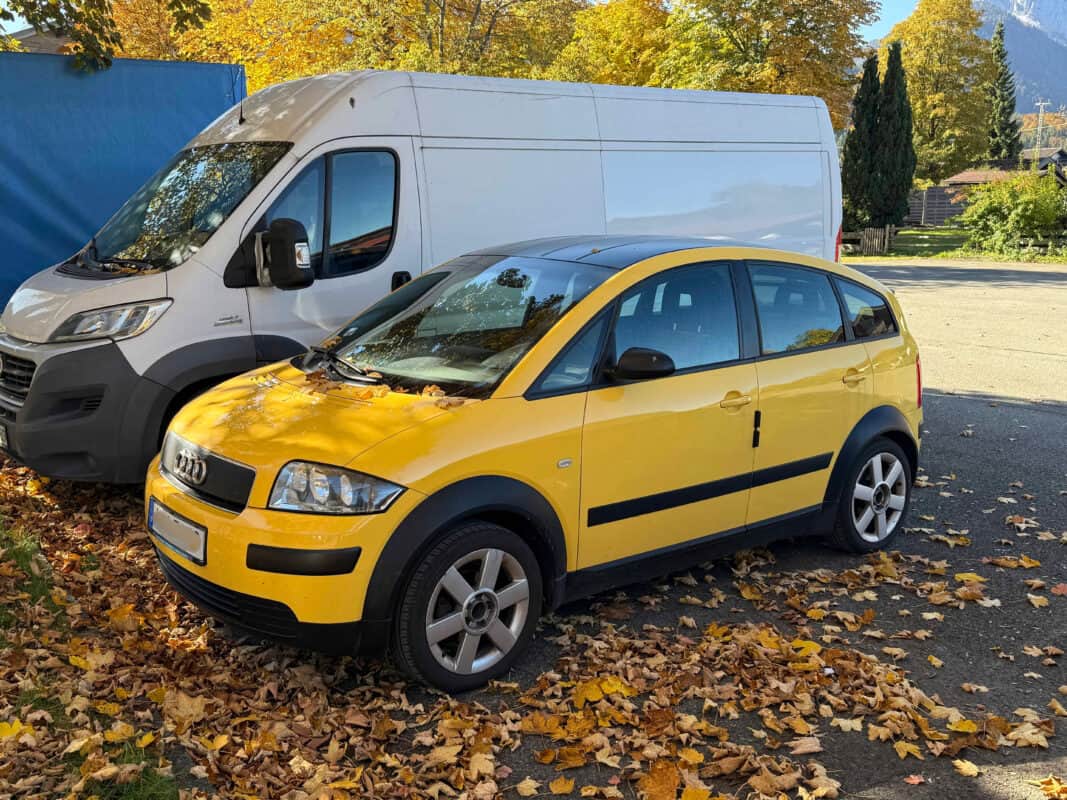
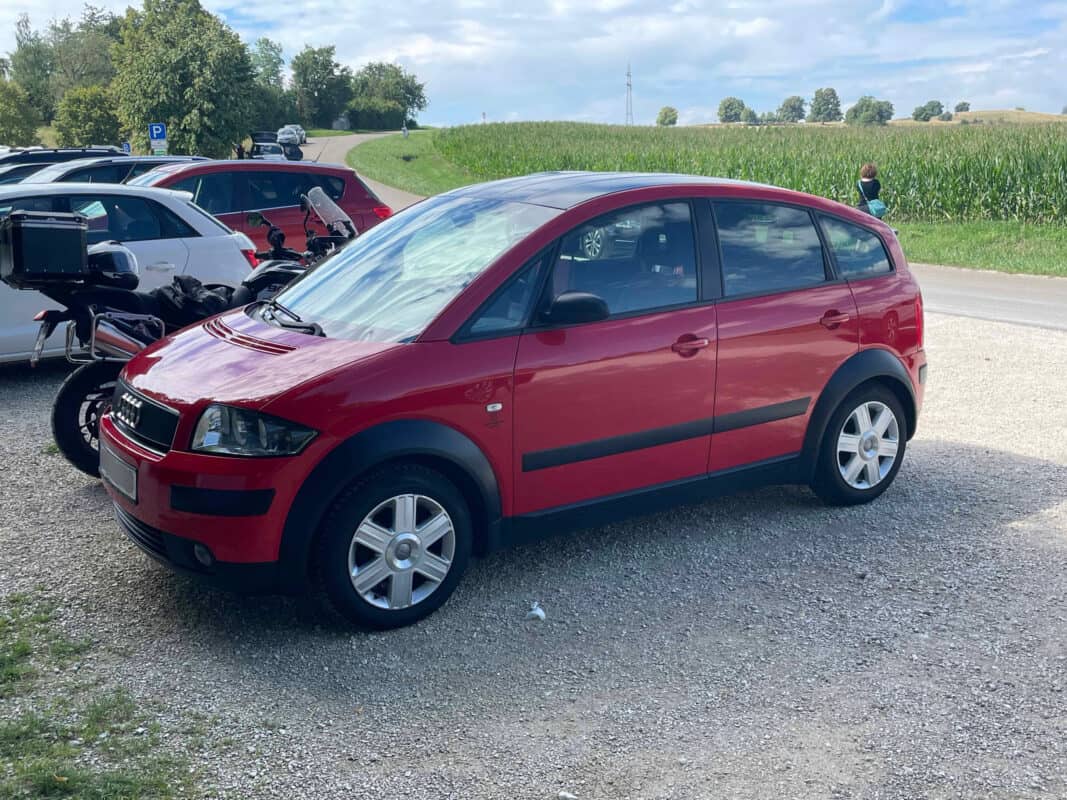
The typical car in Germany is smaller than in the U.S. and some non-Autobahn roadways also can be narrower. We recommend that you don’t rent the smallest economy car as they can lack features like a good touch screen, integrated GPS, good visibility or luggage space.
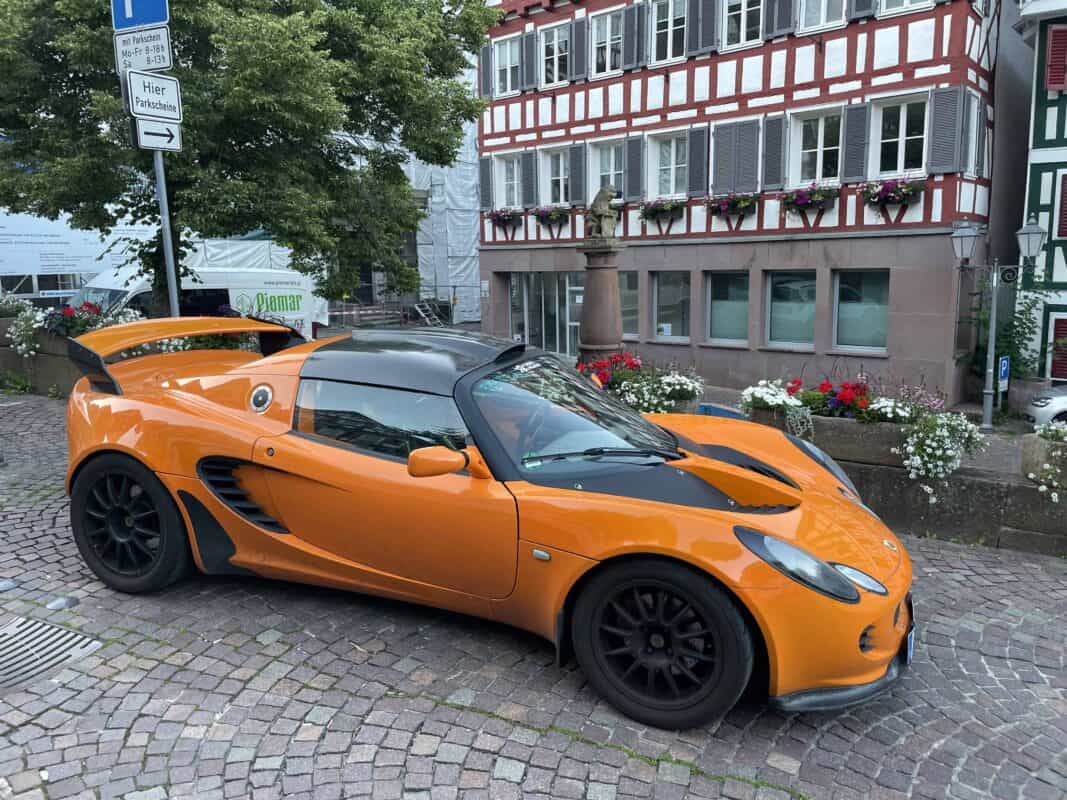
We rented a tiny car once, thinking we didn’t need much space. Then we saw how tiny the car actually was and that it lacked a screen and other features. We promptly went back to the check in desk and upgraded. Fortunately, they had an upgrade available for a reasonable surcharge!
Keeping your rental car size small to medium will help you navigate the narrow roads and the tight parking spaces you will likely encounter. That said, if you’re traveling with your family of 4+ and have luggage, a van may make the most sense.
EVs are also a common option. They offer smooth performance, quiet driving, quick acceleration, and zero tailpipe emissions. The rental companies typically provide Charging Cards or fobs for charging networks and apps for locating charging stations. There are more than 172,000 electric car charging points throughout Germany. That said…we only recommend renting an EV if you’re used to driving and charing an EV at home.
What About Speed Limits in Germany?
We’ve found that the speed limits can change more frequently than we are accustomed to in the US, so do keep a look-out for the posted speed limits. Speed limits in German cities or urban areas are generally 50 kilometers per hour (31 miles per hour). Outside of cities, the standard maximum speed limit is 100 km/h (62 mph) unless otherwise marked.
On the Autobahn, there are stretches where you can drive as fast as you feel safe although the recommended speed limit is 130 km/h (80 mph). As always, be on the lookout for posted speed limit signs, which are prominently displayed, so you shouldn’t miss them, especially near construction zones.
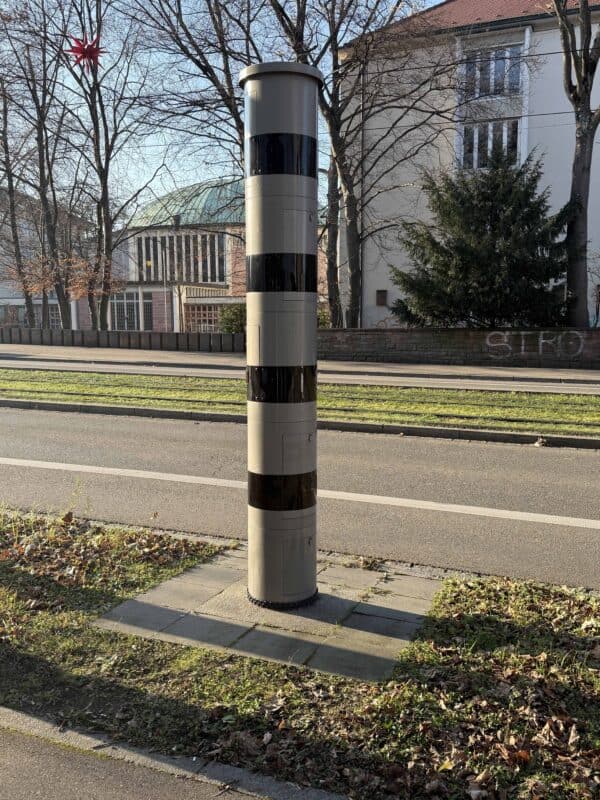
As you enter smaller towns and villages, the speed limit quickly decreases. Be sure to reduce your speed before entering small towns because many have speed cameras…that many travelers only notice after seeing a camera flash.
We can’t emphasize this enough because it’s so easy to get a speeding ticket. Been there, done that…a couple times.
If you see a sign showing a 30 km/h speed limit, there is usually another sign at the end of that section telling you that the 30 km/h limit has ended. Many smaller towns and residential areas also have different speed limits at night to reduce traffic noise. Signs labeled “Lärmschutz” usually set lower speed limits to 30 km/h from 22:00 – 06:00 (10PM to 6AM).
How Does Parking Work in Germany?
Parking can be hard to find in big busy cities unless you look for parking garages (use google or apple maps for that). Many cities actively favor the use of public transportation including bus, train, tram, scooter, walking and biking.
Tip: if you have our DIY Germany Travel Planner, take a look at Step 2: Transportation for more detailed insights on choosing the best mode(s) of transportation for your itinerary.
You’ll need to pay for parking nearly everywhere. The method of payment varies. Some smaller lots require you prepay using coins. Sometimes you’ll pay a person in cash upon entering the lot. Many parking garages issue a ticket up entry, and you need to use that card at the payment machine right before you leave. These machines typically accept credit cards and cash.
More recently, we’ve seen more parking garages that automatically read your license plate on the way in and out, and you pay by credit card by entering your license plate number.
You may also encounter free, but time-limited parking spaces. In these cases, you’ll need to use the Parkscheibe that is supplied with your rental car.
A Parkscheibe is a cardboard disk that looks like a clock that you use to show the exact time at which you parked. You display it in the front windshield so it’s visible to parking enforcement. You must use the Parkscheibe in the time-limited or un-metered spots or risk a € 5.00 fine. We’ve used these when parking at a grocery store that offers say 90 minutes free parking.
Some hotels, guesthouses, and vacation apartments will offer guest parking but not all. Always double check if parking is available, how much it costs, and if you need to reserve or pay for a space ahead of time.
Lastly, keep in mind that parking spaces are often smaller and tighter than in other countries. In tight spots have the passenger exit first to avoid a tight squeeze and to provide distance guidance. There have been times where we’ve looked at the space we’re supposed to fit our car into and thought…that’s just not going to be possible! But with a little patience and creativity, we’ve always managed to park all of our rental cars.
What Are the Different Road Types in Germany?
There are many different types of German roads, each with different characteristics and rules. Here are the main ones you should know about.
Autobahn network: The autobahn or German highways are known for their high speeds, often with no specific speed limit. But there are many sections of the autobahn with posted speed limits usually in areas with heavy traffic or construction. Watch out for these signs to avoid getting hefty speeding tickets. The Autobahn network is always marked with an “A” (for example A7) and blue signs.
Bundesstrassen or federal roads: Bundesstraßen (or “B” roads) are federal roads that connect cities and regions. Many scenic routes like the Romantic Road and Alpine Road go through these roads. They vary in size, with some resembling highways and others being smaller roads.
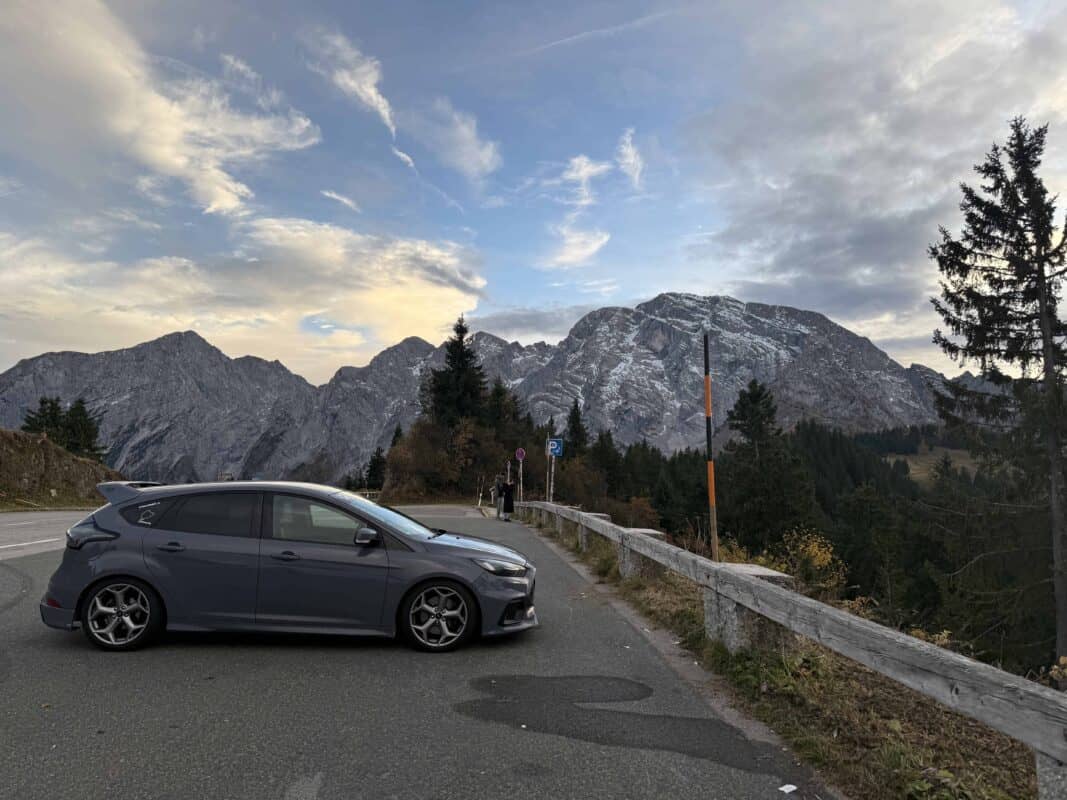
Private roads: You likely won’t come across too many of these. We’ve only driven on a couple of them in Bavaria – one of them was the Rossfeld Panorama Strasse near Berchtesgaden. To use these roads you need to pay a small fee. There will either be a toll booth where you can pay in cash or a machine where you can pay via cash or card.
Drinking and Driving in Germany
As is the case anywhere, don’t drink and drive. Germany has very strict rules regarding this and punishment is serious. The legal blood alcohol content is low, at 0.05%.
What Other Traffic Laws and Rules in Germany Should I Know?
We recommend being well prepared by using the interactive Germany driving guide from Tripiamo.com. We wish we’d had it years ago! Geared towards travelers new to driving in Germany, the video tutorial provides you with the local knowledge, must-know road rules, and driving customs that GPS and travel apps don’t cover. What we really appreciate about Tripiamo is that they give you the most important things to know so it’s easy to remember and not overwhelming.
Aaron’s Final Driving Tips
Here are some final tips and takeaways we’ve learned over the years:
- Be alert for bikes, pedestrians, motorcycles and scooters.
- Designate a person as the navigator so they can give the driver advance warning for upcoming turns, exits, etc.
- Review your route ahead of time and set your navigation before you head out. Use GPS to navigate to your intended parking garage at your destination before you leave so you’re not scrambling when you arrive.
- Driving in a foreign country takes a lot of extra focus. Make sure everyone in the car understands this. Be safe. Don’t text and drive, don’t make calls while you drive, and don’t stream video as you drive.
- People tend to drive at the speed limit. Pay attention to the speed limit signs as they can change frequently.
- Following distances may seem shorter than what you’re accustomed to but always maintain a safe braking distance.
- We use our phones for navigation while driving by pairing or plugging them in with a USB-C cable. Google Maps uses a small amount of data for basic turn-by-turn navigation. Other uses such as Satellite, Street View, and searching for points of interest can be more data intensive and drain your battery.
- Before you leave on your trip, we recommend following the steps to download the local Google Maps for your travel area to your phone. This will save you from heavy downloads over slow internet connections while driving.
- Driving can take more time than you think, so be patient, add some time to compensate for a missed turn, and always make safe decisions not rushed ones.
Understanding the tips and recommendations above will go a long way to prepare for a fun, memorable and problem-free trip.
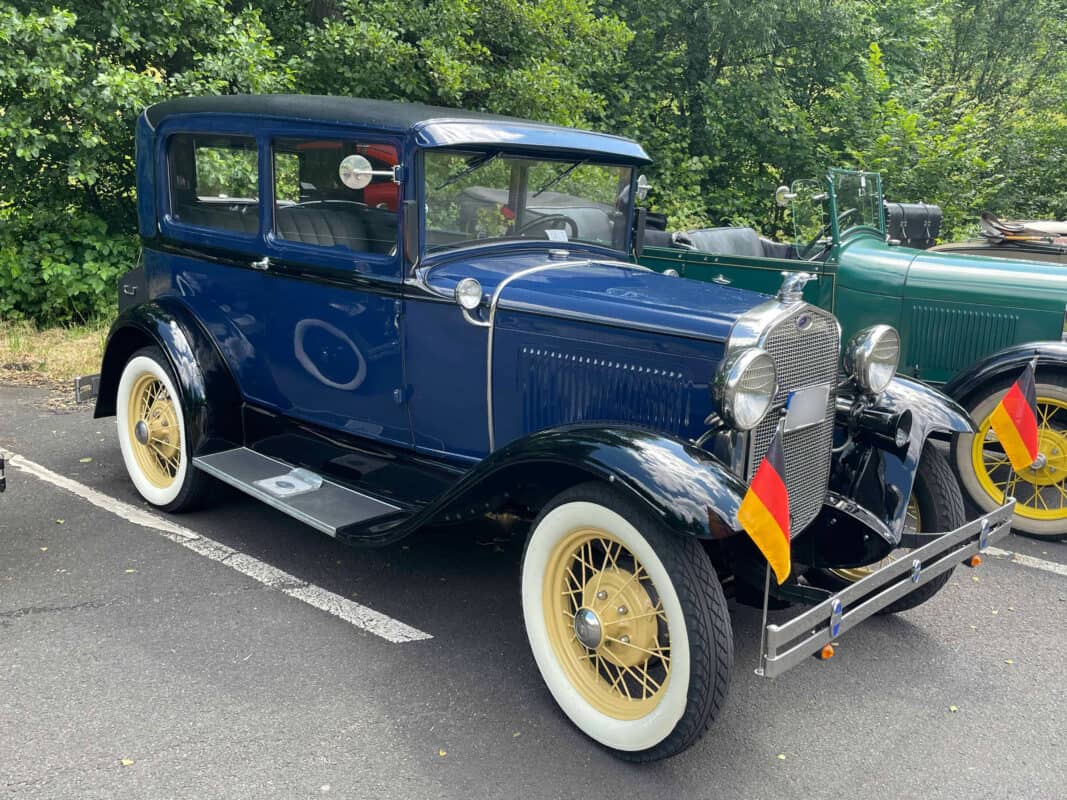
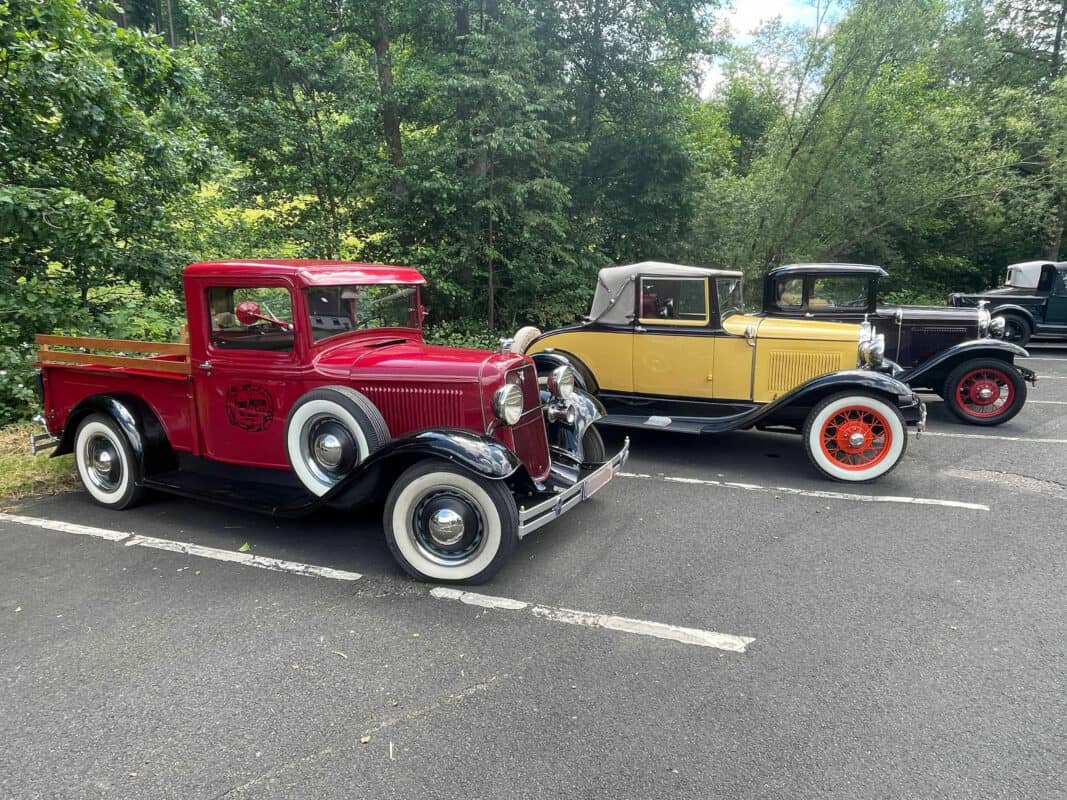
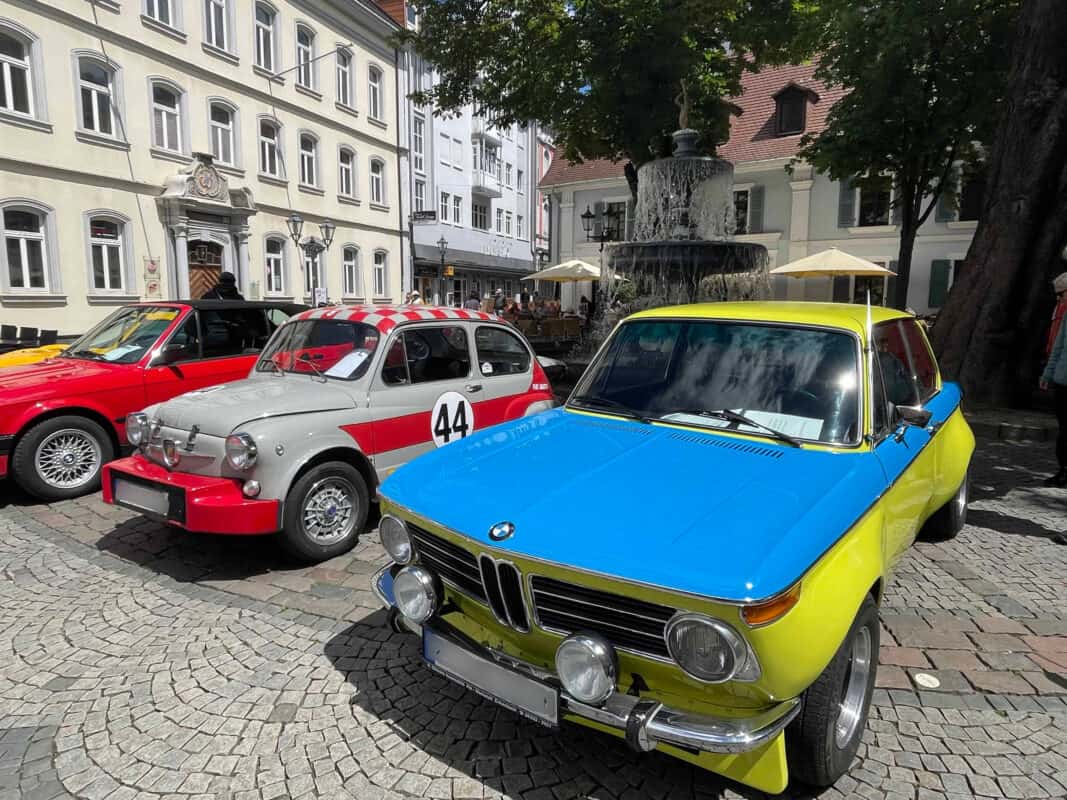
Classic cars are referred to as “Oldtimer”!