5 Things to Know Before You Go to Germany
This post may contain affiliate links. Read my disclaimer policy.
Today I’m sharing 5 “on the ground” essentials to help you skip common rookie mistakes and navigate Germany with ease, so you can stay fully present, feel a little more like a local, and enjoy every minute of your trip!
This article is also available as the Germany Travel Planning podcast episode 39. Use the player below to listen or continue reading the article below. See episode transcript on Apple podcasts.


Helpful Links & Resources
- DIY Germany Travel Planner
- Custom itinerary service
- One-on-one trip planning consult service
- Itinerary review service
What First-Timers to Germany Need to Know
Germany is one of the most rewarding destinations in Europe, but there are a handful of quirks that catch visitors off guard every single time. These aren’t big things…but once you’re on the ground in Germany they can feel like a much bigger deal if you don’t know about them in advance. I always make sure our clients know these before they go, because a little heads-up goes a long way toward a smoother, more enjoyable trip.
These insights are from the extensive Know Before You Go section of our DIY Germany Travel Planner. In that section, we answer all of the questions our clients have asked us and address the things about Germany they don’t yet know to ask about. We always recommend reading this section before you start planning your trip and then reviewing it right before you leave for your trip so you feel prepared and confident for your trip!
1. Stores Are Closed on Sundays
This one surprises a lot of first-timers. In Germany, most shops, boutiques, grocery stores (as well as offices, the post office, etc) are closed on Sundays and public holidays. If you want to pick up a bottle of wine, grab a gift, or stock up on snacks, do it on Saturday.
The good news is that restaurants and cafes, and many museums, castles and tourist sites are open on Sundays. And if you’re in a larger city like Munich, Berlin, or Cologne and you need a few basics, check the train station. There’s usually a grocery store there that stays open. Bakeries are often open in the morning.
When Aaron and I travel in Germany, we make Sundays our slow day: a long lunch, a walk through a beautiful old town or park, a cafe stop or a few hours in a Biergarten. Once you lean into a slower, calmer Sunday, it can become one of the most lovely things about traveling in Germany. It’s a cultural thing, and we really encourage you to embrace it at least for part of the day.
2. Dates Are Written Differently in Germany
This is a small thing that can cause problems if you’re not watching for it! In the US, we write dates month/day/year. In Germany, it’s day/month/year. So 06.03.26 in Germany means March 6, 2026, not June 3, 2026.
When you’re booking accommodations, tours, train tickets, or entry passes, double-check that you’re interpreting the date correctly. A quick double-check before you confirm a booking can save you a real headache.
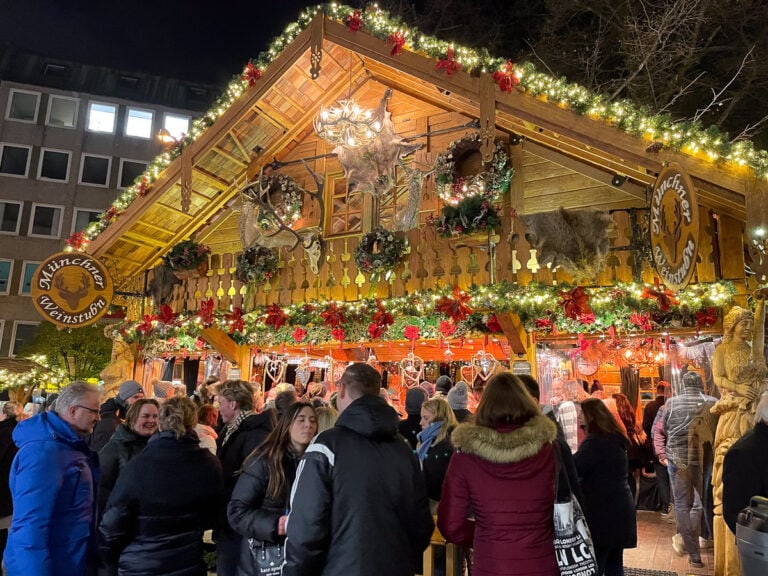
3. Know the Pfand System at the Christmas Markets
If you’re heading to Germany for the Christmas markets (which are absolutely worth planning a trip around, by the way), this one is for you. When you order a Glühwein, hot chocolate or food that comes in a non-disposable mug, bowl, plate or cup, you’ll pay a deposit called a Pfand. It can range from a couple of euros to as much as 10 euros.
Two things to keep in mind:
- Bring enough cash to cover both the food or drink AND the deposit. Christmas markets are still very much cash-heavy, and you’ll go through it faster than you expect.
- Don’t forget to return your mug or bowl before you leave that stall to get your deposit back. It’s easy to wander off without getting your money back, especially when the market is buzzing with people.
Aaron and I have visited hundreds of Christmas markets across Germany and we see tourists leave without getting their Pfand back. Don’t make the same mistake!
4. Always Have a Few 1 or 2 Euro Coins on You
Many museums, castles, and tourist sites don’t allow large bags or bulky coats inside and ask you store your belongings in a locker. Simply pop in a 1 or 2 euro coin, store your things, and get the coin back when you retrieve your bag. Easy, but only if you have the coins on you!
The same goes for grocery store carts. They’re typically chained together in Germany, and you unlock one with a coin, which you get back when you return the cart. A few stores have moved away from this system, but most still use it.
I keep coins in a little dedicated coin pocket in my day bag so I always have a euro or two on hand for lockers, carts, and public toilets.
5. Public Restrooms Usually Cost Money
This is the one that really catches people off guard. Most public restrooms in Germany require a small fee, usually between 50 cents and 1 euro. In some bigger train stations, it’s crept up to around 1.50 euro.
Some toilets are coin-operated, while others offer an option to swipe your credit card. Paying before going through a turnstile to access the toilets is becoming more popular but sometimes you can still walk in, use the toilet, and then leave coins on a small dish.
Most pay toilets tend to be clean, well-maintained, and well stocked, so honestly, it’s worth paying for. You will find free toilets here and there…if you just assume all toilets will cost you a bit of money, finding a free toilet is a nice surprise.
Plan Your Germany Trip with My Germany Vacation
If you’re enjoying the podcast and getting excited about your Germany trip but are feeling overwhelmed by all the details of planning the perfect trip, we’ve got you covered!
Our DIY Germany Travel Planner and our Germany Trip Planning services help you create a personalized itinerary that fits your travel style—whether you’re dreaming of fairytale castles, scenic train journeys, or off-the-beaten-path adventures.
With custom itineraries, one-on-one consults, itinerary reviews and our DIY Germany Travel Planner, we’ll make sure you feel confident and ready for an unforgettable, meaningful, and FUN trip.
I don’t even know how we would have cracked the code for this trip without you!!! You are simply amazing and so helpful!! Thank you so much! – Julie
About Cate
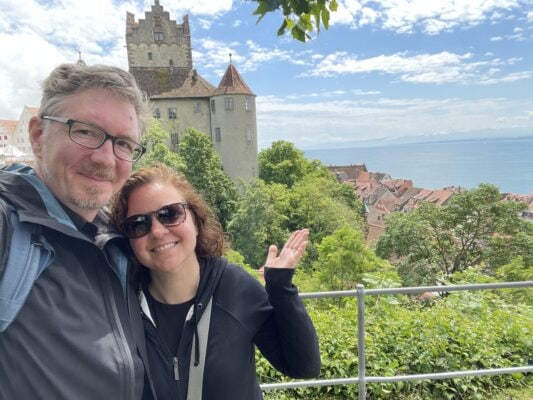
Hi, I’m Cate, host of the Germany Travel Planning podcast and co-founder with my husband Aaron of My Germany Vacation.
I used to live in Germany and have worked as a German professor and intercultural trainer preparing people to live, study, and work in Germany. Aaron, who used to work in IT, and I have 35 years experience traveling to all corners of Germany (and into surrounding countries).
As digital nomads we spend several months each year in Germany and surrounding countries doing on the ground travel research.
We started My Germany Vacation to help you plan unforgettable, stress-free, and super fun trip to Germany and beyond. We’d love to help you, too!
Please Rate & Review Our Podcast
If you enjoyed this episode please leave a 5-star rating and review where you listen to podcasts. It helps make our podcast visible to more travelers. We appreciate your support!